
If you stop to think about it at an Irish funfair, a certain kind of unease sets in. A child joyfully screams on something that is spinning faster than it probably should, the dodgems clatter, and the Ferris wheel rotates. No one verifies who examined the bolts. The majority of people never inquire. In Ireland, the honest response for a long time was that very few people could tell them, and there was no real authority behind it.
That is the peculiar aspect of this tale. Public safety on amusement rides has never been legally under the purview of the State’s primary workplace safety regulator, the Health and Safety Authority. Instead, under planning legislation that dates back to the Planning and Development Act of 2000, Funfair certification has been held by local authorities. Unlike the UK’s Health and Safety Executive, it is a licensing function rather than a safety inspection regime. In 2017, the HSA itself acknowledged this gap to the Oireachtas, stating unequivocally that it had no authority over public fairground equipment.
It’s the kind of gap that only becomes apparent when something goes wrong. And things have not gone as planned. On a coaster at Tayto Park, a child suffered a broken neck. Nine people were hospitalized after a stairwell collapsed in a horror attraction there, but no statutory body ever looked into it. At a Blanchardstown funfair, a woman and a teenage girl were thrown from a carriage. The HSA denied any involvement because the incident wasn’t “work related.” The unsettling truth that ride safety in Ireland has long been dispersed, informal, and reactive was exposed by each case.
This was attempted to be fixed. Niall Collins of Fianna Fáil proposed legislation in 2017 to grant the HSA statutory authority over funfairs; by 2019, it had been thoroughly discussed in the Dáil. The government was hesitant about what enforcing it would actually entail in practice, but it did not completely oppose it. There was a promise of an interdepartmental review. It’s important to note that such promises tend to stall as the news cycle progresses, and this one did so for the most part.
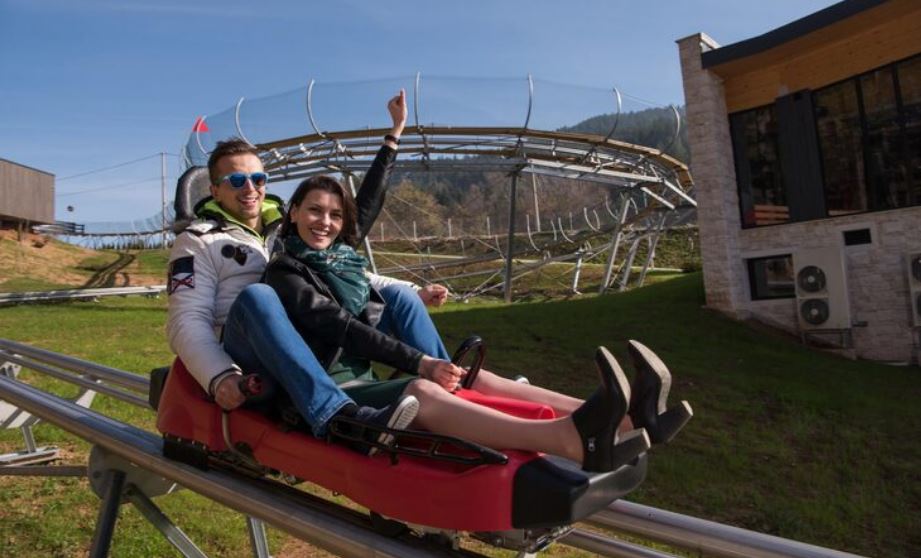
The more recent changes are more subtle and perhaps more significant. Senior inspector Deirdre Sinnott flagged work-at-height, electrical safety, and contractor supervision in temporary event environments as part of the HSA’s nationwide summer inspection campaign, which began in June 2026 and focused on large outdoor events, concerts, and festivals. Nowadays, funfairs and amusement rides fall under the same category. They are quickly assembled and disassembled, frequently next to stages and crowd infrastructure. Funfair law is not necessarily being rewritten by the Authority overnight. It’s broadening the definition of what constitutes a transient, fast-paced location worth examining, and amusement rides are inadvertently falling into that category.
The contrast across the water is instructive. Nine rides at a Devon theme park were closed by Britain’s HSE in 2025 due to an inspector’s certification expiring; they were only reopened after compliance was established. There is currently no comparable inspection body in Ireland that has such direct control over rides. It’s possible that the HSA’s increasing presence at outdoor events is more of a slow, almost unintentional tightening brought on by incidents, public pressure, and a feeling that someone must eventually take responsibility for this.
It’s still unclear if that drift will result in actual legislation. In Ireland, funfair operators are still required by law to possess certificates, and the majority of them take this seriously. However, for an industry built on speed, height, and faith in machinery that most riders never think to question, the structure surrounding them—who checks, who investigates, and who responds when something breaks—still feels thinner than it should.
