


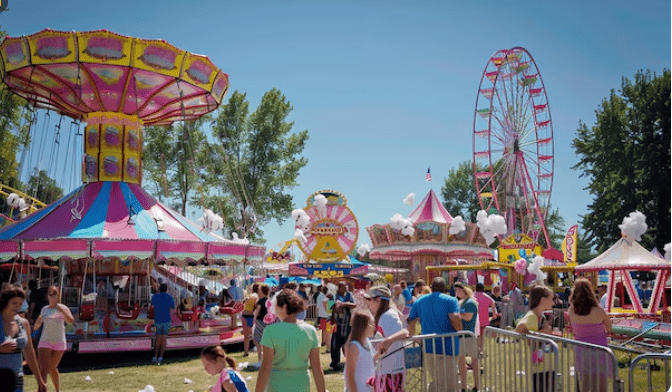
In Auckland, a carnival ride no longer simply appears at a public park. A checklist of requirements, which has grown far more complex in recent years, must be completed before the operator may assemble anything, tighten the first bolt, or connect the first power line. Operators operating inside Auckland Council’s covertly constructed dual-layer permit system for seasonal carnival attractions are finding that compliance calls for more documentation, more lead time, and more tolerance for on-site inspections than the previous method required.
There are two phases to the structure’s operation. For any device they plan to run, operators must first get a Certificate of Registration from WorkSafe New Zealand, the country’s workplace safety body. That certificate follows the specific device and cannot be transferred across rides. A site permit from Auckland Council, which covers the precise place where the ride will be installed, is then required separately. Before any public activity is allowed, the council’s own officers visit the location and perform a physical inspection. They are examining the surrounding environment as well as the ground itself to see if it is solid enough to support the weight and whether there is a chance of sinking. removal from structures and trees. properly built protective fencing. Additionally, a minimum of twelve meters must separate you from any live electrical lines.
The twelve-meter rule is strict and unchangeable. Carnival rides usually move and are taller than they appear from a distance. The height of a laden gondola on a pendulum ride and the arc of a swing are examples of things that go beyond the device’s actual footprint. The distance of twelve meters from live electrical infrastructure is not random; rather, it represents the equipment’s actual operating risk envelope. That clearance requirement can disqualify places that might otherwise seem feasible for operators selecting a site on a waterfront or in a park.
Some operators have been unprepared for the application schedule. The council seems to be consistently following the rule that submissions made fewer than fifteen working days prior to the planned start date may be rejected. The planning horizon required by Auckland’s procedure is longer than what many carnival operators have incorporated into their operational model. These operators are accustomed to moving fast between locations, coming, setting up, and leaving within a week or two. The permit process must begin before the operator has even ended at their prior location because fifteen working days is equivalent to three calendar weeks.
The low fees—$11.50 for the first device for a maximum of seven days and $2.30 for each additional device—indicate that the goal is regulatory rather than profitable. In addition to eliminating the potential of bargaining, the price structure is determined by legislation rather than municipal discretion, which gives operators calculating their expenditures over numerous locations stability.
A separate Auckland Council Event Permit is required for events held on public property, such as parks, reserves, and waterfront areas. These permits are distributed regionally by local boards in accordance with their own guidelines for the use of public spaces. This implies that a carnival requesting authorization to operate in a park in one area of Auckland will deal with a different local board than one two suburbs away, and the standards that those boards follow may change. Operators operating in the larger Auckland region now have to deal with an additional layer of geographic complexity for each site separately.
In actuality, the system generates a more verifiable and documented record of which rides are operating where, under what circumstances, and with what inspection history. How consistently the inspections are carried out and how meticulously the documentation is kept will determine whether that results in significantly safer outcomes. The structure is in place. The effectiveness of enforcement is determined by its quality.
