


On a midweek morning, standing at the edge of Surfers Paradise, the Gold Coast’s aspirations seem plausible. The city behind it hums with something that feels less like leisure and less like industry, and a little bit like both at once. The beach is long, and the light is ridiculously good. It is not difficult to envision the location becoming crowded with tourists from other countries. Determining whether that imagining is becoming a real plan is more difficult.
It is, as it happens. The Gold Coast recently unveiled a 59-point tourism strategy that is specifically linked to the 2032 Olympic and Paralympic Games in Brisbane. The strategy’s goal, which seems almost bold on paper, is to surpass a fourth Australian state in terms of tourism output in six years. Three states are already outperformed by the city’s industry. That’s not a small assertion.
Although officially based in Brisbane, the 2032 Games will have a significant impact throughout South East Queensland, giving the Gold Coast a legitimate international stage that it hasn’t always had. The city’s current venues from the 2018 Commonwealth Games are a significant asset, and the Australian Olympic Committee has publicly acknowledged the city’s role. For its part, the International Olympic Committee has given preference to bids that make use of already-existing infrastructure rather than starting from scratch. In this way, the Gold Coast currently has a credential that most cities must produce.
The fact that local officials refer to this more as an infrastructure play than as a tourism opportunity is intriguing and perhaps somewhat telling. Mayor Tom Tate has been quite forthright about it: the Olympics are a means of compelling the area to construct the projects it ought to have constructed decades ago. airport by heavy rail. extensions for light rail. An additional M1 corridor. These aren’t flashy, but they’re the kind of upgrades that, far more than any advertising campaign could, alter a city’s personality for foreign visitors.
In actuality, the transport issue is what keeps planners up at night. In contrast to London or Tokyo, South East Queensland operates entirely on automobiles. Public transportation currently accounts for less than 7% of daily trips on the Gold Coast. That figure is a silent liability for an area that anticipates receiving hundreds of thousands of foreign tourists traveling between locations throughout Brisbane, the Sunshine Coast, and the Gold Coast at the same time. The feasibility studies that were commissioned prior to the bid’s acquisition were open about this: the transportation burden of the 2032 Games becomes a real risk in the absence of significant investment in quick regional connectivity.
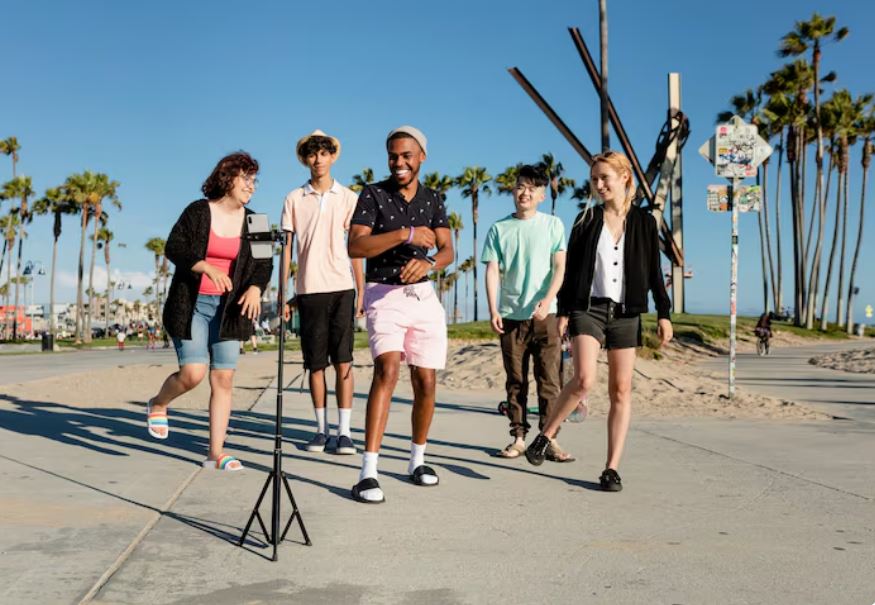
The Gold Coast seems to have gained more from the 2018 Commonwealth Games than just medals or media attention. It provided the city with a practice run for handling foreign audiences, international media, and international scrutiny. Its beaches served as training grounds for athletes. After years of quiet existence, venues suddenly attracted audiences from all over the world. That is an experience that lasts. Some of the quiet confidence behind the current planning may be explained by the fact that it lingers in the institutional memory of local organizers.
Honest observers are unable to definitively answer the question of whether the economics ultimately support the amount of investment. Pre-Games economic projections frequently overstate benefits, while post-Games assessments are typically more sobering, according to research from the Australian Parliament. Aware of this past, supporters of Brisbane 2032 have strongly embraced the “New Norm” model, which focuses on already-existing venues dispersed throughout a region rather than the white-elephant construction that has plagued previous host cities. It makes sense as a hedge. It’s still unclear if it’s sufficient.
With a subtropical coastline, world-class surfing, a bustling major city behind it, and the allure of an Olympic calendar to make the timing feel right, the pitch is simple for foreign visitors, even if the execution isn’t. It’s possible that the Gold Coast just needs to set up the necessary infrastructure and let the event take care of the rest. Additionally, the competition for Olympic tourism dollars may be more intense than the 59-point plan predicts, both from Brisbane itself and from every other location vying for the same foreign visitor. It’s not a long time—six years. However, it’s also not nothing.
