


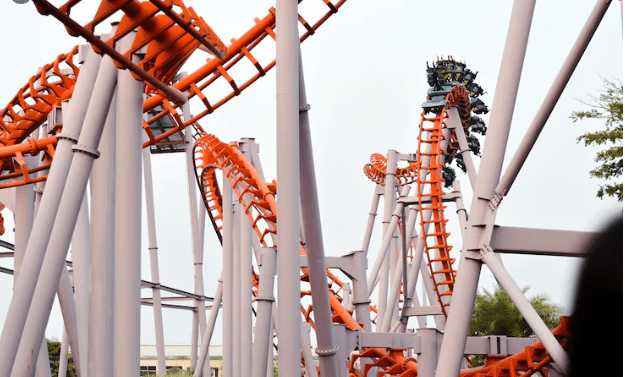
The line for the Stealth rollercoaster at Thorpe Park in Surrey extends past the sixty-minute board on a busy Saturday. Park employees periodically update that number, which is posted on a sign at the line entrance. The Fastrack lane, which is used by visitors who paid more for expedited access, is a shorter line that passes through the same gates a short distance away. The number of persons in the quicker lane and the extent to which their presence influences the average wait time for everyone else are not indicated on the board at the line entry. One of the main issues surrounding consumer transparency in British theme parks at the moment is the discrepancy between what is shown and what is actually taking place.
While it plays a role, the accuracy of the figures on the boards is not the main focus of the queue-time transparency argument in the UK. It concerns a more general structural question: how truthful are parks with regular ticket holders about what their day will truly include, given that they have become more and more dependent on premium fast-track passes for income? Parks are legally required to make sure their advertised wait times are not misleading, and the Advertising Standards Authority has control over deceptive advertisements. However, the sector is straddling the contentious boundary between dynamic queue management and deceptive disclosure without much guidance from above.
The most obvious issue has been the disability pass dilemma. When Merlin Entertainments changed the eligibility requirements and usage terms for its Ride Access Pass, a program that enables visitors with disabilities to access rides without having to wait in regular lines for extended periods of time, the company, which runs Thorpe Park and Alton Towers among other UK parks, attracted a lot of negative attention. Similar criticism was directed at Drayton Manor. The parks said that an increase in the use of hidden disability passes had grown to such an extent that it was causing operational issues and lengthening wait times for other visitors. Disability groups argued that commercial convenience shouldn’t be the justification for limiting accessibility accommodations.
The parks haven’t completely adjusted to the change in the information balance brought forth by third-party queue tracking apps. Visitors can compare the wait times posted at ride entrances with what other visitors are actually experiencing by using platforms such as Queue Times, which aggregate crowdsourced and scraped data from parks in real-time. A formal complaint to the ASA takes months to build the kind of public pressure that arises when those figures deviate dramatically on a regular basis, making the discrepancy apparent and shareable.
What parks have constructed follows a business rationale. Every time a family chooses to upgrade after seeing a lengthy regular line, the financial argument for fast-track passes is strengthened. Fast-track passes produce significant income in addition to gate entry. However, that model’s sustainability hinges on normal wait times that are annoying enough to encourage premium purchases without getting so bad that customers feel routinely misled about what a standard ticket offers. The dispute revolves around the balance between those two factors, which the parks have less and less control over as independent data sources let customers to see how things are actually operating.
