
Over the course of a day, a traveling carnival sets up at the edge of a showground in a small town in New Zealand. The merry-go-round rises first, followed by the bumper cars in their low container with the faded rubber strips around the borders. By nighttime, kids are waiting in line, the generator is humming, and the lights are on. It’s a common sight at agricultural festivals, summer fairs, and A&P exhibits across the nation. What needs to happen before any of those rides start up is changing, as is what happens to operators who are unable to provide the necessary documentation.
WorkSafe New Zealand is in the forefront of the tightening of New Zealand’s amusement device rules. Any mechanically powered ride, including ferris wheels, merry-go-rounds, bumper cars, and similar equipment, must have a current Certificate of Examination from a Chartered Professional Engineer in order to operate legally under the Health and Safety at Work Act and the related Amusement Devices Regulations. It’s not a one-time need. It is reliant on the particular device, needs to be updated, and represents a real, independent mechanical evaluation of the ride’s state.
The next stage is WorkSafe registration. To obtain an official Registration Certificate for each equipment, operators must provide photos, inspection records, and the necessary costs. They can only apply to local councils for the operating permit that permits them to start up at a particular location once their national registration has been verified. Sequencing is important because WorkSafe registration does not require a council to issue a permit, and local council approval does not replace WorkSafe registration. Both are necessary. Inspectors and municipal authorities are increasingly enforcing this distinction more vigorously than they have in the past. If an operator does not have either, they are operating unlawfully.
Non-compliance has immediate repercussions. Events that are discovered to be running unregistered or uncertified rides will be shut down right away; there will be no grace period or notice. The operator’s ability to operate anywhere in the nation may be suspended in the event of persistent or major infractions, which are punishable by heavy fines. A nationwide suspension is a business termination rather than a setback for traveling performers whose whole livelihood is based on moving from event to event throughout New Zealand’s show season.
The boundary matters realistically, thus it’s important to note what the regulations don’t cover. Bouncy castles, climbing frames, and inflatable play equipment are examples of static or non-mechanically powered attractions that are not subject to the particular amusement device certification and registration requirements. Although they are not subject to the same multi-step compliance process as powered rides, they are nonetheless subject to normal workplace health and safety obligations. That distinction makes some sense: a mechanical attraction that operates at height or speed fails in a different way and less spectacularly than a bouncy castle. However, it also implies that depending on what they are operating, different operators have different regulatory burdens.
In the sector, there is a perception that the present enforcement drive has been developing for a while. The fundamental standards of New Zealand’s amusement device regulations have been in place for many years. The desire to address non-compliance instead of simply reporting it and moving on seems to have shifted. It conveys a different message when inspectors show up at events and immediately shut down unlicensed rides than when they issue a notice of improvement and return the following season. It’s yet unclear if this change results in long-term compliance or just drives marginal businesses out of the market.
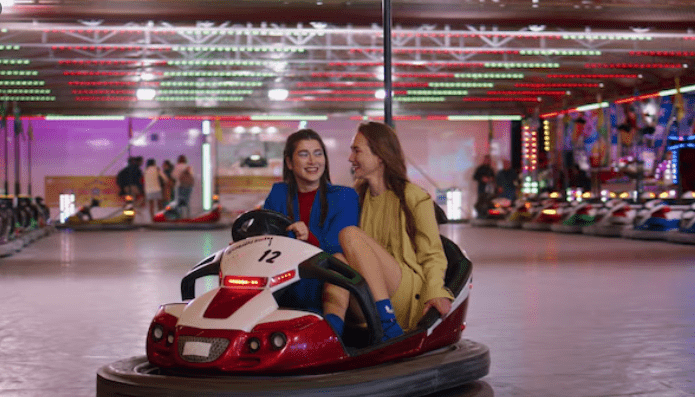
None of this paperwork is visible to families waiting in line at the ferris wheel. However, it is difficult to dispute the practical reasoning behind the tightening of the enforcement structure. Someone must have thoroughly inspected a mechanically driven ride that carries kids in a temporary configuration and risked their professional reputation on that inspection. That is the purpose of the Certificate of Examination, and the system can only be meaningful if it is consistently, rather than selectively, required.
