


A British campsite in late spring has a distinct sound: kettles whistling, zips being pulled, a dog barking at a far-off cow. That sound has been more frequent and louder than usual this year, and it’s not totally coincidental.
During the May bank holiday weekend alone, about 1,500 reservations were made at Petruth Paddocks in Cheddar, Somerset, which is almost twice as many as usual. Jules Sayer, the owner, put it this way: people just don’t have as much money to spend, and it’s now impossible to ignore the cost of filling up a car. This year, about 60% of his visitors came from within 40 miles, which speaks volumes about how far people are now willing or able to travel for a vacation.
Although it would be tempting to refer to this as a boom, “quiet surge” seems more accurate. No one is celebrating it with a parade. There isn’t a glitzy campaign declaring that tents are once again popular in Britain. One reservation at a time, it’s happening in the background, motivated more by math than by nostalgia. Holiday plans are affected strangely by diesel at current prices.
The manager of Greenacres Campsite in Gloucestershire, Maureen Bessant, recounted a season that appeared uncertain in April but quickly improved. Early commitments were not being made. They were waiting, keeping an eye on their bank accounts, and making reservations with only a few weeks or even days remaining. The broader glamping data also reflects this trend, with over 30% of Q1 stays over the previous three years being reserved less than two weeks in advance. It implies a style of vacation preparation based on prudence rather than assurance.
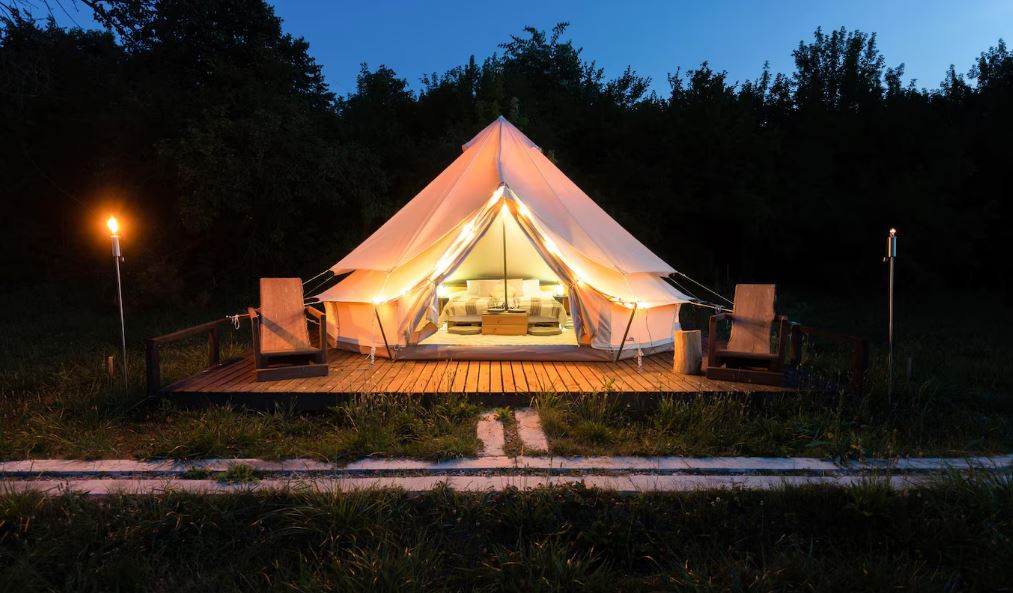
Beneath the fuel-price narrative, there is also a generational issue. Approximately 60% of adults in the UK claim to have either been glamping or plan to do so; among younger travelers, this percentage rises dramatically to 81% for Gen Z and 76% for millennials. It’s difficult to ignore the fact that a significant portion of glamping reservations—often more than half, depending on the season—do not include any children. milestone weekends, friend groups, and couples. The pod in a Somerset field has subtly evolved into a substitute for the overseas anniversary trip or the city-break hen party.
This does not imply that British campsites are printing money. While camping and caravanning are popular, hotels and indoor attractions in the same area are struggling due to the same tight household budgets, as noted by John Turner of Visit Somerset. According to him, tourism depends on disposable income, which decreases first for the more expensive items when expenses rise. In contrast, camping is one of the few vacation options that becomes less expensive the more people avoid it; there is less competition for pitches and more pricing flexibility.
Less is known about whether this is a true change in how Britons take vacations or if it’s just a sign of a tighter economy that will reverse as soon as fuel prices start to decline. Vicky Green, who was staying at Greenacres, stated that she was delaying planning a second trip for August in the hopes that she would still be able to travel overseas. That reluctance conveys a crucial message: camping isn’t always the first option. It’s usually the sensible one.
Whether it’s a pod, yurt, or plain canvas, the appeal seems to lie somewhere between comfort and restraint—a form of escape that doesn’t require post-purchase justification. Many people are finding that to be sufficient for the time being.
