
You most likely have a picture of yourself at Fantasy Island if you were raised anywhere close to Buffalo. Perhaps you have cotton candy in your hands. Perhaps you’re squinting in the sun outside the wooden roller coaster that rattled in a way that was both thrilling and dangerous. The Grand Island park was more than just a tourist destination for many years. It was a school field trip, a rite of passage, where parents gave their children a roll of tickets and an ambiguous meeting time by the carousel. This summer, that park won’t open. Additionally, there’s a good chance it won’t ever open again.
The announcement was made discreetly, as these days, usually through a Facebook post, a website statement, and a few local news clips. The Chicago-based company that took over in 2021 and rebranded it as Niagara Amusement Park and Splash World, IB Parks and Entertainment, claimed that attendance and revenue were insufficient to cover the cost of renovation and operation. Refunds are being given to season pass holders. Somehow, the vacant grounds will still host the Fourth of July fireworks. It’s an odd sight: a parking lot full of cars with no lines for the Ferris wheel, fireworks exploding over quiet rides.
When the park first opened in 1961, it was known as Two Guns Territory, a Western-themed attraction. Later, it changed its name to Martin’s Fantasy Island, and finally just Fantasy Island. Nestled between the suburbs and the Niagara River is 85 acres of small-town Americana. Speaking with those who recall it gives me the impression that the location was significant in a difficult-to-quantify way. Disney wasn’t involved. It wasn’t Cedar Point. They owned it.
The closure is striking because it reflects a national trend. For some time now, smaller regional parks—those that can’t afford a $100 million coaster every three years—have been having financial difficulties. Indiana Beach came dangerously close to death. Geauga Lake has long since vanished. The larger chains have also been losing properties. The idea of a mid-sized family park with a wave pool, a Tilt-A-Whirl, and a stage where a costumed person waves at young children may no longer be feasible. The cost of labor, insurance, and maintaining wooden coasters in compliance with regulations never decreases.
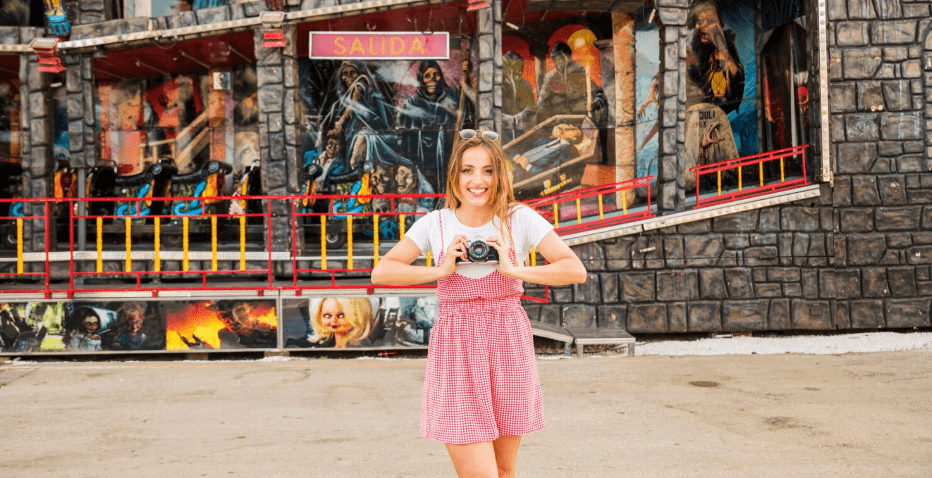
Locals’ reaction has been unfiltered, though. There are thousands of comments on the park’s Facebook page. People exchanging pictures. Cousins are tagged. I’m wondering, a little desperately, if this is it. The owners have been cautious not to refer to it as a permanent closure; instead, they claim to be “evaluating future opportunities for the property,” but anyone who has witnessed amusement parks fail in the past is aware of what that term typically entails. The property is worth a lot. Grand Island is now a suburban area. Most fans are aware that a quiet calculation is taking place somewhere in a Chicago office.
Losing a place like this has a unique quality. You miss the food when a restaurant closes. You find another store when one closes. When an amusement park closes, you lose the actual physical location where memories were created. You are unable to return to your previous position. Locals loved the Silver Comet, a wooden coaster, but it hasn’t been used since 2020. It’s difficult not to imagine it out there right now, exhausted from the weather, waiting for someone to make a decision.
Perhaps a buyer shows up. Perhaps IB Parks manages to reopen in 2027, albeit on a smaller scale and with a different concept. Perhaps the entire area is bulldozed for townhouses. As I watch this unfold, it seems more like a slow farewell that no one signed up for than a business tale. In July, there will be fireworks. Most likely, people will show up. They will observe the rides they are unable to ride while standing in the lot. They’ll drive home after that.
