


There is a moment, sometime in late June, when Montreal stops pretending it is not summer and commits entirely. The terraces fill. The festivals stack up on the calendar like buses running behind schedule. And increasingly, in parks across the island, children run shrieking through jets of cold water while parents settle onto nearby benches with the particular satisfaction of people who made a good decision. The splash pad, once a modest afterthought in the city’s parks infrastructure, has quietly become something more.
Montreal is heading into what tourism officials are already calling one of its biggest summers on record. Tourisme Montréal is forecasting roughly five percent growth across Canadian, American, and international markets, with hotel occupancy expected to hover around 80 percent between June and September, spiking to 85 percent during peak weeks. The city is hosting the Formula One Grand Prix, marking the 50th anniversary of the 1976 Olympics, and welcoming visitors from France, the Philippines, California, and seemingly everywhere else. Against all of that, splash pads might seem like a footnote. They are not.
Quebec’s splash-pad boom has been building for a few years now. In Pierrefonds-Roxboro, a $1 million project replaced the beloved PPK pool — a fixture since 1964 that finally closed in 2023 due to costs and flood-plain concerns — with a new splash pad and picnic area. It is a meaningful shift. The pool had history, community attachment, real emotional weight.
The splash pad that replaced it is free to use, requires no lifeguards, and stays accessible in ways a traditional pool simply cannot. Borough Mayor Jim Beis has pointed to increased funding for parks and green spaces in recent years as part of a broader push toward accessible, free outdoor activities. It is hard to argue with the logic, especially when you watch a dozen families using a space simultaneously at no cost to anyone.
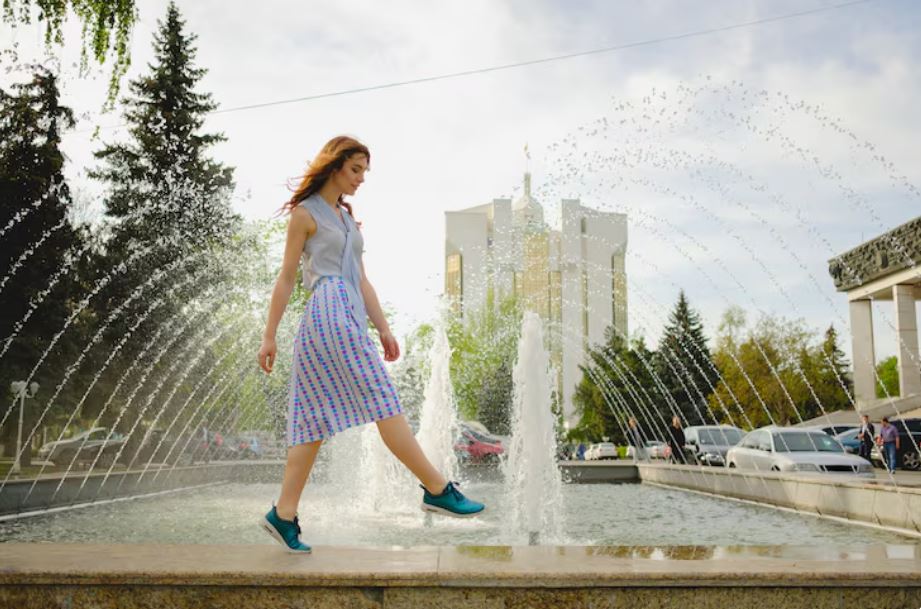
The city now lists 331 outdoor public pools, wading pools, and splash pads across the island. That number deserves a moment. It is not a number that suggests a city dabbling in water features. It suggests a city that has made a policy decision, even if it has not always framed it that way publicly. And the decisions are layered. Parks like Dickie Moore in Parc-Extension are not only cooling stations — they are engineered to absorb stormwater, reduce sewer overflow, and mimic natural drainage through beds of rocks, wildflower gardens, and strategically placed splash infrastructure. The city calls them “sponge parks.” The engineer-speak is a bit dry, but the concept is practical and increasingly urgent given what climate change is doing to Montreal’s rainfall patterns.
There is a tourism dimension here that does not always get acknowledged in planning documents. Families traveling with young children make decisions based on granular, practical factors. Is there shade? Is there somewhere for kids to run? Is it free? Montreal’s expanding network of splash pads answers all three questions at once. A family from Vermont or Ontario or suburban Toronto visiting for a long weekend does not necessarily arrive with a splash pad on their itinerary. But they find one, usually by accident, and it tends to anchor their afternoon in a neighbourhood they might not have otherwise explored. That has real value for local businesses nearby.
Climate is also pushing this in ways that feel less optional by the year. Summer in Quebec is getting hotter and more unpredictable. The repeated heat waves of July and August 2025 lowered St. Lawrence water levels enough to restrict some water-based activities. Outdoor festivals have faced cancellations due to extreme weather. In that context, splash pads offer something that larger tourism infrastructure sometimes cannot: they are resilient, low-maintenance, and genuinely useful on the days that matter most.
Montreal has always had summers worth showing up for. What is changing is the texture of those summers — who they are accessible to, how neighbourhoods participate in them, and what visitors find when they wander off the main tourist corridors. The splash-pad network is part of that shift. Not the whole story, but a more significant chapter than it might appear.
