


The announcement that Niagara Amusement Park & Splash World would not be opening its doors for the 2026 summer season arrived on Grand Island in the manner that these announcements frequently do in small towns: slowly at first, then all at once. By the following morning, it was being discussed in local Facebook group comment sections, at the coffee counter, and in the grocery line. Speaking with locals gives the impression that nobody is completely shocked. However, people continue to be taken aback by its finality.
The park’s operators used language that has become almost commonplace in the decline of small businesses in the United States to explain the closure. years of work. financial strains. operational difficulties. They used the word “unsustainable,” which is a word that conveys both a lot and very little. The smell of fried dough wafting across Grand Island Boulevard on a July evening and the lines of teenagers wearing matching polo shirts clocking in for their first real paycheck are two examples of the texture of what’s truly being lost.
In an interview with 2 On Your Side, town supervisor Peter Marston described the park as a fantastic place to work and lamented the decision. It’s the kind of remark that any official, anywhere, could make. However, if you pay closer attention, you’ll notice something more intimate. Since Fantasy Island was well-known for decades prior to its numerous rebrandings, Marston noted that the majority of the children he attended high school with on Grand Island had worked there. That seemingly insignificant detail highlights the significance of the location. a first job. Behind the funnel cake stand, a first crush. In the summer heat, a first taste of independence was earned.
It’s difficult to ignore how frequently these tales have the same plot. A cherished but aging regional park changes ownership. Revitalization is promised by the new owners. The rides become a little squeakier, the cost of tickets increases, and attendance declines as some investment occurs and some does not. The gates don’t reopen after a brief announcement, usually in November or early winter. This was done in Ohio by Geauga Lake. For years, Six Flags New Orleans decayed. The pattern is evolving into an American disappearance genre.
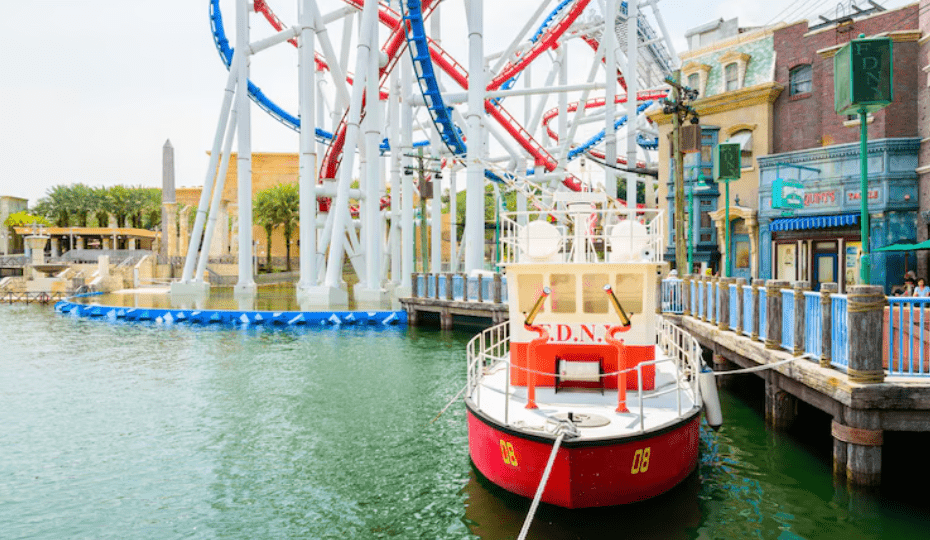
The wound’s topography is what makes Grand Island unique. According to Marston, the park is located in the heart of the town. That isn’t a metaphor. In actuality, it is in the center of everything. Going dark on a property that size results in more than just a vacancy on the tax roll. Everybody who drives by it has a gap in their daily mental map. Marston has heard rumors that some private developers are already investigating, but no one has disclosed their plans. Probably housing. Maybe retail. Probably something less fascinating than a place where kids scream on roller coasters.
Even though it’s more difficult to feel than the emotional ripple, the economic one is equally important. Marston told it like it was. People stop here, they stop there, they stop for pizza. The trickle-down, as he described it, is enormous. Along the I-190 corridor are motels, gas stations, and pizzerias. This won’t cause any of them to crumble. They will all sense it.
Refunds for 2026 season pass holders will be issued over the next thirty days, according to park officials. Strangely, the property will continue its Fourth of July fireworks tradition; specifics will be revealed soon. That final pop of color over a place that would otherwise be closing down has an almost poignant quality. A reminder that the property still exists, whether intentional or not. that something might still occur there. Nobody knows what will happen next for the time being, and that uncertainty is a summer unto itself.
