


You might completely miss it if you drive into Elysburg, Pennsylvania, on a warm Saturday in late June. No rope-line for ticket scanning, no neon baton-wielding parking attendant, no towering entrance arch. It was just a grassy lot, a wooded turn off the road, and the faint but distinct sound of a wooden roller coaster doing what wooden roller coasters do: clacking, moaning, and sometimes making someone scream. For almost a century, Knoebels Amusement Resort has been subtly opposing the contemporary theme park industry.
When Knoebels first opened in 1926, it was a swimming grove and picnic area near Roaring Creek. Families would bring baskets of food and spend the afternoon there. Now in its fourth generation of ownership, the Knoebel family has never fully abandoned that notion. The park itself still feels like a community fairground that just kept adding attractions until it unintentionally became one of America’s most reputable amusement destinations, despite the fact that there are rides—good, world-class ones, actually.
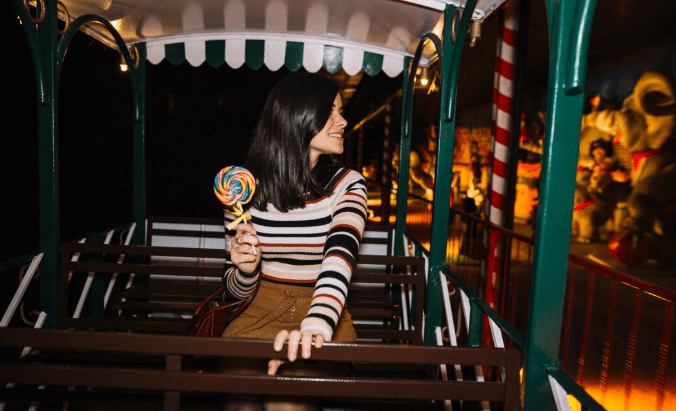
When you walk in, you’ll notice how little theater surrounds the experience. No gates. No booth for admission. You don’t need a wristband unless you want one. You enter free of charge, park for free, and purchase a ticket booklet or an all-day pass if you choose to ride. If not, you can eat pierogies and watch other people ride for the whole day. In an industry where the going rate for a single-day ticket at a major park now flirts with the price of a domestic flight, this model is subtly radical.
In some way, the roller coasters are not an afterthought. Rebuilt in 1985 from the remains of an abandoned San Antonio coaster, The Phoenix consistently ranks close to the top of enthusiast rankings for the world’s best wooden coaster. It generates the kind of airtime that lifts riders clean off the bench and is smooth in a way that wooden coasters typically aren’t. Older, creakier, and genuinely frightening in areas where more recent haunted attractions only rely on volume, The Haunted Mansion is a dark ride that dates back decades and has its own cult following.
Riders still reach for a brass ring on a 1913 Grand Carousel; this is the kind of detail that seems unreal until you see it in action. According to most accounts, the food is ridiculously delicious for an amusement park and is priced like it was in 2008. You are welcome to bring your own cooler. You are welcome to pack your own picnic. At a Disney gate, try doing that.
How Knoebels has managed to survive in this manner is a recurring question, particularly in trade press coverage. It includes family ownership. Geographical factors also play a role; Elysburg is not on a popular tourist route, which has shielded the park from pressure to change into something it isn’t. Speaking with regular customers gives the impression that the Knoebels family genuinely doesn’t want to sell to a chain or franchise the experience. It remains to be seen if that will continue for another generation.
Eventually, you notice how at ease everyone appears to be. A $200 ticket is not the reason why parents are planning their entire day. Adolescents are not running between lines. People take seats on benches. They consume food. To get a sweater, they stroll back to their cars. It’s difficult not to feel that something has been subtly conserved here—something that the larger parks lost long ago, perhaps without realizing it was worth preserving.
