
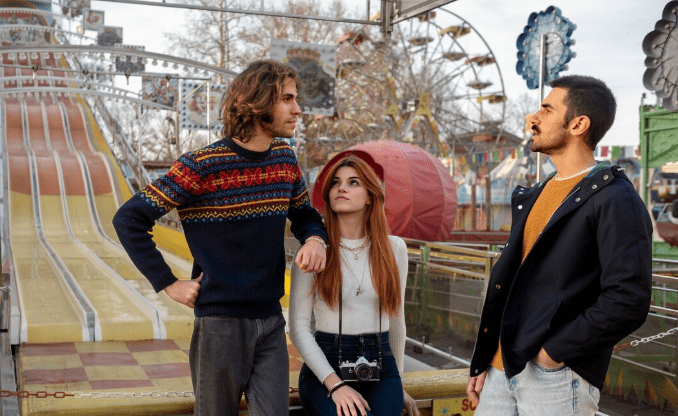
Every summer, children climb into carnival rides, buckle up, and spin skyward while their parents watch from below across Vermont’s undulating fairgrounds, from Lyndon to Manchester to the vast, level Champlain Valley. Laughter, cotton candy, and the distinct scent of fried dough and diesel that is exclusive to county fairs are all present. Everything seems innocuous. Everything seems to be under supervision. For the most part, it isn’t.
Vermont continues to be one of the few states in the nation where safety inspections of amusement rides are not mandated by law. Operators are required to maintain workers’ compensation for employees, carry at least a million dollars in liability insurance, and register with the Secretary of State. However, before the device begins spinning kids through the air, no government employee needs to see it in person. Closing that gap, which has been there for decades, has proven surprisingly challenging.
More than most, Richard Lawrence is aware of this. He is the president of the Caledonia County Fair in Lyndon and a Republican state representative. He has been advocating for legislation requiring inspections since at least 2013. His initial bill was unsuccessful. The practical issue of who would actually conduct the inspection and the financial concerns of small fairs already operating on thin margins caused subsequent attempts to stall in the same spot. Watching a man run a fair and fight to regulate it at the same time is almost frustrating, but Lawrence seems genuinely conflicted—not in a political sense, but rather as someone who has stood on those grounds for forty years and silently wondered what might go wrong.
When a rider was killed at an Ohio fair in the summer of 2017, the problem became more acute. It turned out that the same ride company was working at Manchester’s Green Mountain Fair in Vermont at the time; everything went smoothly, but the close proximity was unsettling. There was no way for Vermont to react. No authority to send, no inspector to dispatch. Only a legal distance could be observed by the state.
This has been handled differently by various fairs. Independent inspectors are hired voluntarily by the Champlain Valley Exposition, which holds the biggest fair in the state every August. The exposition’s manager, Chris Ashby, characterized it as a “comfort level” as opposed to a legal necessity. That statement conveys a lot. degree of comfort. Ensuring that a mechanical ride carrying a six-year-old has been thoroughly inspected shouldn’t require institutional comfort. Nevertheless, Vermont has been there.
In 2018, a bill that was headed toward the governor with a requirement for yearly inspections by certified officials appeared momentarily promising. According to Title 31, Chapter 16 of Vermont statutes, rides must be inspected by a Level II certified inspector from the National Association of Amusement Ride Safety Officials, or an equivalent. However, discussions about funding, enforcement, and true accountability have remained ambiguous and are periodically reviewed before being discreetly put on hold.
Here, it’s difficult to ignore the pattern. Following a national accident, a proposal emerges. It creates some momentum. The enthusiasm gradually fades when the financial issue—who pays and which organization is in charge of it—emerges. There is no denying that Vermont is a small state with real resource limitations. However, “we don’t have a funding source” has become a persistent justification for doing nothing about a problem that impacts families every summer in this state.
According to Lawrence, the ride operator at the Caledonia Fair is responsible for inspecting their own rides using a certified inspector. It wasn’t good enough, he admitted. There is value in that honesty. It is still genuinely unclear if it will ultimately result in a statute with actual teeth.
