


When you get on a roller coaster, you experience a specific type of cognitive dissonance. Logically, you are aware that millions of people do this every summer and return home without any problems. For a brief moment, though, as you stand in line and watch the cars speed through the air at seventy miles per hour, you wonder: What if this is the only time it doesn’t work? That fear is, for the most part, unfounded. But not every time.
Every year, hundreds of millions of people travel to Europe’s theme parks, and the vast majority of them leave with sunburned cheeks and expensive churros. Beneath the upbeat branding and clipboard-waving ride operators, however, lies a more difficult-to-see past filled with human error, mechanical malfunctions, and instances where the line between excitement and disaster was extremely thin. Some parks have incident reports that, after reading them, alter your perception of the lines.
Almost any such list would unjustly place Alton Towers in Staffordshire, England, at the top. The park is one of the most popular tourist destinations in the UK, drawing sizable crowds every season. Its failures are also among the most well-documented because of this visibility. It’s still challenging to read about the 2015 crash on The Smiler, a fourteen-loop coaster. During maintenance, a sixteen-person train was sent into a test car that was stationary on the track after a computer system was manually overridden. Investigators later stated that the collision was comparable to a car crash at 90 miles per hour. Legs were lost by two teenage girls. Three more people sustained severe injuries. In the end, Merlin Entertainments, the park’s operator, was fined five million pounds. It was almost three years before The Smiler reopened. This incident may have had the biggest impact on the safety culture of British theme parks.
A smaller, older park nestled onto an island in the city’s archipelago, Gröna Lund in Stockholm carries a different weight. It’s the kind of place that feels classic and slightly worn in the best way. The Jetline roller coaster derailed in the middle of its ride on a June 2023 summer evening. Three people were ejected from the train. Afterwards, one woman passed away from her wounds. Nine more people were admitted to the hospital. The park closed, and the inquiry got underway. Incidents at parks like Gröna Lund, where the danger seems to belong in a different era, are particularly unsettling.
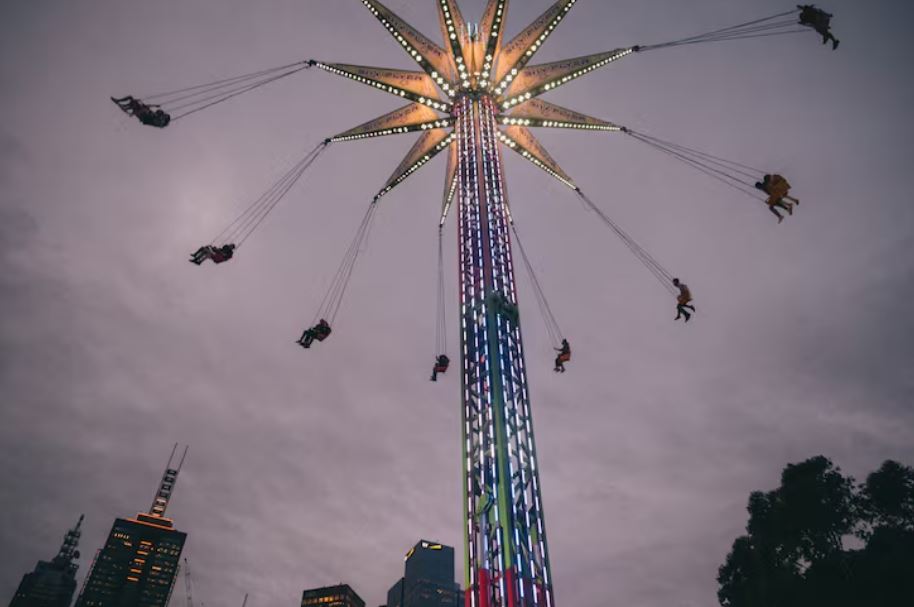
Across the English Channel, Flamingo Land in North Yorkshire has amassed a more subdued but enduring record of incidents that don’t garner international attention but highlight the difficult reality of maintaining aging infrastructure. One of the more isolated theme parks in Britain, Oakwood Theme Park in Wales, is located in the rural Pembrokeshire area. Over the years, it has experienced a number of ride-related incidents, which has led to ongoing concerns about whether smaller parks with tighter budgets can reliably meet the safety standards that their larger counterparts manage with committed engineering teams.
Although Battersea Park Funfair is no longer in operation, its ghost remains at the center of any meaningful conversation regarding the safety of amusement parks in Europe. The wooden Big Dipper roller coaster catastrophically failed in May 1972 during a busy half-term holiday. The haulage rope broke. A train derailed and crashed after rolling backward down a steep incline. Five kids were slain. There were thirteen more injuries. On the ride, investigators discovered more than fifty flaws. In court, the term “death trap” was used. After two years, the funfair closed and never reopened. It’s difficult to ignore how much of what is now considered standard safety procedure was developed in reaction to incidents such as this one.
Because there isn’t a single EU framework that governs all of Europe’s amusement parks, national regulations differ greatly from one another. When you look at the numbers honestly, they do indicate progress over time. Industry organizations such as IAAPA gather data and advocate for self-regulation. Between 2014 and 2024, the UK recorded an average of 319 funfair injuries annually, most of which were slips and falls rather than ride malfunctions. That number is statistically quite low for a continent where tens of millions ride these attractions each season. For the families who have waited on the wrong side of a barrier while firefighters figured out how to bring someone down from twenty feet in the air, however, statistics don’t really help.
Alton Towers, Gröna Lund, Flamingo Land, Oakwood, and the now-defunct Battersea aren’t necessarily the most careless establishments in Europe. Some have carried out extensive reforms. Some have been completely shut down, restructured, or fined. What they have in common is a chronicle of incidents where something went wrong in a location that was intended to feel secure. Those fleeting thoughts in the queue feel less illogical than they appear because of this tension between the promise of controlled excitement and the unpredictable reality of machines, weather, and human judgment.
