


A particular kind of American experience can be found on the boardwalks along the New Jersey shore in the summer: wooden planks, salt air, the sounds of rides competing with arcades’ music, and long lines for funnel cake at eight o’clock on a Saturday night with a crowd that includes young children, groups of teenagers, and older couples on their yearly week at the shore. The energy is basically harmless. It’s also harder to control than it looks from the outside under some circumstances and during some times of day.
The regulations governing New Jersey’s boardwalk operations are currently being rewritten, and the modifications go beyond basic ride safety upgrades. In reaction to late-night crowd problems that have happened over prior summer seasons, Wildwood has mandated the year-round shutdown of its boardwalk between 1:00 AM and 5:00 AM. Unaccompanied juveniles are subject to evening curfews in both Seaside Heights and Wildwood, which begin at 10 PM. Both towns now prohibit large bags and backpacks after specific hours. Single-point entrance systems with bag checks and metal-wand screenings at the perimeter are now used for beachfront events and carnivals. These crowd control techniques are taken from the arena and stadium operations toolkit and adapted to outdoor seasonal venues that have traditionally had far less regulation.
This is complemented by the ride safety dimension, which tackles distinct issues. The operational requirements for portable and inflatable attractions, which have traditionally been less strictly regulated than permanent fixed rides at established parks, are the focus of legislative proposals such as NJ S4178. In the event of strong winds or severe weather, the law would mandate the immediate evacuation and deflation of inflatable equipment, followed by a necessary re-inspection before the equipment could be put back into service. That may seem like simple sense, and it is for the most part, but there is a gap in the current regulations that has allowed individual operators to make operational judgments without a set standard for when to close and what needs to be done before reopening.
The New Jersey Department of Community Affairs already has a system in place for granting permits for public rides, which includes criteria for manufacturer type certification and yearly mechanical testing. The green sticker, which operators must publicly display to show the public that a ride has passed the formal inspection procedure and is approved for the current season, is the obvious proof of that system. There is a sticker system. Whether the framework surrounding it is sufficiently comprehensive to cover all the scenarios where things can go wrong is the question being explored in the current legislative conversation. This is especially important when it comes to portable equipment that moves between locations and may be inspected at the start of a season without additional formal oversight between events.
The sequence of events that typically results in regulation revisions in this business is noteworthy. Generally speaking, rather than through proactive standard-setting, amusement ride safety regulations improve in response to incidents, such as a ride failure, a crowd event, or an injury serious enough to warrant legislative attention. This pattern is not unique to New Jersey. Rather than coming from an ongoing assessment of whether the regulations were sufficient, the current round of changes in New Jersey is specifically linked to recent disruptions and worries. This is how the majority of safety regulations in seasonal industries operate, and they typically result in regulations that address the particular failures that were apparent rather than the entire spectrum of potential failures.
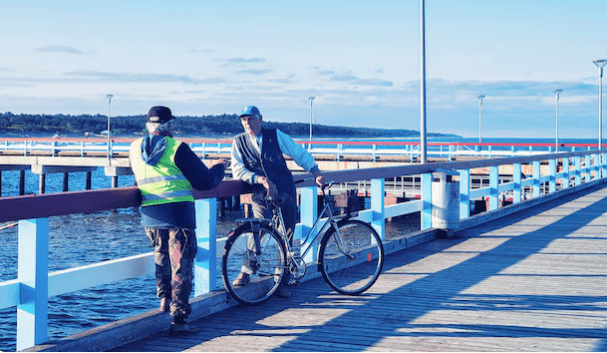
Like hundreds of other boardwalk and carnival communities around the nation, Wildwood and Seaside Heights operate in a space between traditional theme parks, which are permanent, heavily capitalized, and subject to strict regulations, and unofficial traveling fairs, which have traditionally operated with far less oversight. The goal of the new regulations being drafted in New Jersey is to align the middle-tier management standards with those of the permanent park sector, which have been in place for many years. It’s genuinely unclear if the current round of changes goes far enough or if more incidents will lead to more updates. It is evident that the framework is evolving, moving in the direction of more structured oversight as opposed to less.
