


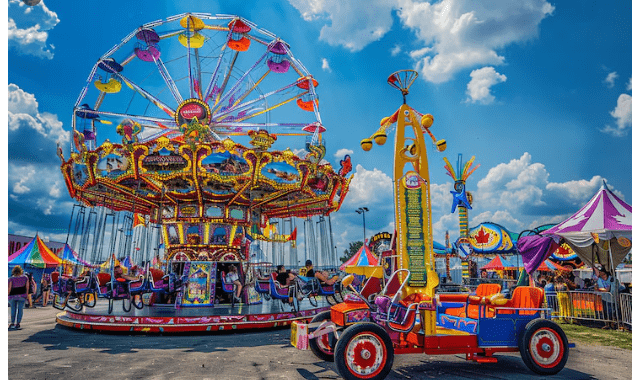
Traveling funfairs consistently, almost ceremoniously, make their way to town centers, park fields, other seasonal locations throughout Britain each summer. The locals have a spinning chair ride, waltzers, and most likely a ghost train within a weekend when the lorries arrive and the rides come together over the course of a day or two. One aspect of the sight is how quickly the shift occurs. From the standpoint of a safety regulator, it’s also the aspect that needs the longest attention.
The majority of the population has never heard of the framework used by the UK to control traveling funfairs. The main regulating body is the Health and Safety Executive. Before their equipment can transport paying passengers, ride operators must comply with the inspection requirements set forth by the Amusement Devices Inspection Procedures Scheme, or ADIPS. Every ride must pass a significant technical inspection before being used for the first time and at least once every twelve months, according to the existing regulations. Alongside these regulations, the Fairgrounds and Amusement Parks Joint Advisory Committee, or FJAC, offers advisory counsel that helps operators comprehend the law and lower risks in real-world situations.
For many years, this framework has been in place in many versions. It has gradually changed as occurrences have triggered evaluations and as technical standards in the larger amusement sector have evolved. The main piece of legislation is still the Health and Safety at Work Act of 1974. The FJAC, which consists of representatives from the operator side, the inspection side, local authorities, and the HSE itself, is a framework with true professional expertise behind it. It creates a system that, by most measures, works for most of the fairground industry most of the time.
Every major fairground incident raises the question of whether “most of the time” is sufficient. Instead of using a channel specifically for fairgrounds, the HSE uses its RIDDOR reporting mechanism—Reporting of Injuries, Diseases and Dangerous Occurrences Regulations—to record injuries at attractions. This system is used for all occupational and public safety occurrences. This implies that rather than being recorded and analyzed with the detail that could allow for more focused intervention, the sector’s safety data is part of a larger reporting infrastructure.
Traveling operators’ mobility presents unique issues that established parks do not. Authorities that are familiar with the location, the rides, and the operator’s background examine every piece of equipment at a permanent theme park like Alton Towers. A traveling operator frequently assembles and disassembles equipment, travels between locations, and may run across local authorities at each stop who have little institutional knowledge of the operator’s performance history. The system depends on the quality of the inspection and the accuracy with which operators present their certification, but the ADIPS annual inspection certificate offers some continuity in this regard. An operator whose ride has passed its annual inspection can prove that to any municipal authority that requests it.
The business association that represents traveling funfair operators, the Showmen’s Guild, views this discussion with a particular tension. The Guild actively engages in the advisory framework and sincerely supports safety standards. Additionally, it represents members whose means of subsistence rely on a regulatory framework that permits them to run their businesses without incurring expenses that would render them unviable. Compared to larger fairground companies with greater financial capacity to absorb compliance costs, smaller operators operating a few pieces of equipment bear an uneven share of the costs associated with more frequent inspections or stricter documentation requirements.
MPs regularly bring up the issue in parliamentary questions, and the HSE periodically assesses whether the current framework is enough or whether new events point to gaps that need special legislative attention. It’s evident that there isn’t now any new legislation from the government that expressly targets traveling funfairs; the framework is the framework, and the question of its appropriateness is still unanswered.
