


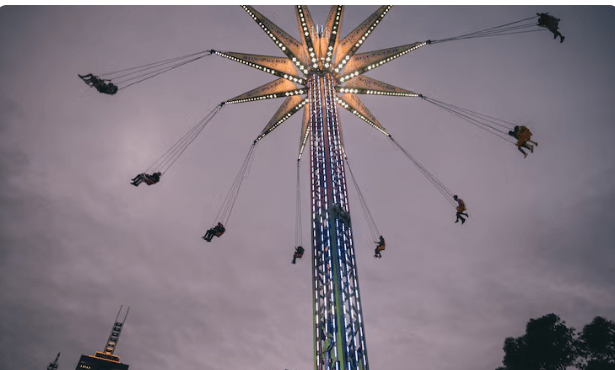
In Texas, the state did not check the ride your youngster recently boarded at a county fair or regional amusement park. Amusement ride inspectors are not employed in Texas. In the existing structure, it never has. The state requires operators to have at least $1 million in liability insurance per injury, collects a $40 filing fee per ride, and requires an inspection to be carried out by a private engineer who has been approved by the operator’s insurance company. The ride’s state compliance sticker serves as proof that this procedure took place. There is no proof that a governmental worker looked at anything.
This arrangement is neither unlawful nor a secret. Under the Amusement Ride Safety Inspection and Insurance Act, Texas established this system, which is overseen by the Texas Department of Insurance. The reasoning behind it is similar to the reasoning behind much of Texas’s regulatory philosophy: private parties with financial stakes in the outcome, such as insurance firms, have enough motivation to guarantee thorough inspections. It is not the state’s responsibility to send inspectors out into the field, but rather to establish the structure and collect the filing fees.
This model’s detractors have been arguing for years, and their case has a structural consistency that is hard to ignore. Inspectors with insurance approval are not state employees. Instead of the general public, their main professional connection is with the insurer. Instead of being required by a governmental regulator with enforcement power, the inspection standards they use are industry-based. Additionally, rather than relying solely on an independent state record, the investigation and reporting framework for occurrences is largely dependent on the results of the insurance relationship. Safety advocates contend that the biggest risks build up in the space between those two things.
One of the more significant legislative attempts to reorganize the system was House Bill 2289, which suggested transferring oversight authority from TDI to the Texas Department of Licensing and Regulation, an organization with a well-established enforcement architecture that manages licensing, inspections, and compliance across a number of regulated industries. HVAC technicians, electricians, and cosmetologists are already under TDLR’s supervision. The reasoning behind the planned transfer was that an organization centered on licensing and enforcement would be more appropriate for the real task of supervising ride safety than an insurance regulator that was mostly concerned with financial compliance. The move is still pending.
The most significant legislative reform to come out of recent sessions is the biennial reporting requirement. At the very least, a documentary record that didn’t previously exist in the same structured manner is created by requiring TDI to generate thorough compliance and enforcement reports every two years, which monitor which operators are certified, which are not, and what enforcement actions have been done. It’s more of a transparency measure than an enforcement one, but even in situations where direct enforcement authority is still restricted, transparency generates accountability pressure that might motivate behavior change.
