


A maintenance technician is traversing the entire length of a roller coaster track at six o’clock on a spring morning, before there is a single automobile in the parking lot. not going on a ride. not operating a train. Walking and examining every rail segment, connection point, and piece of hardware that absorbed thousands of bike cycles yesterday and only the nighttime temperature dip today. The gates to the queue are still padlocked. It is dark in the admission booths. However, the inspection has already begun.
One of the most comprehensive daily safety procedures in any company that interacts with customers is the pre-opening inspection procedure for an amusement park attraction. Before the first visitor enters a loading platform, a number of overlapping checks—mechanical, electrical, structural, and operational—must be finished and recorded. The amount of time needed varies depending on the intricacy of the ride, but for a large flat ride or a significant coaster, the process usually takes an hour or longer and requires multiple people to work through a certain sequence that cannot be shortened or bypassed without formally documenting the deviation.
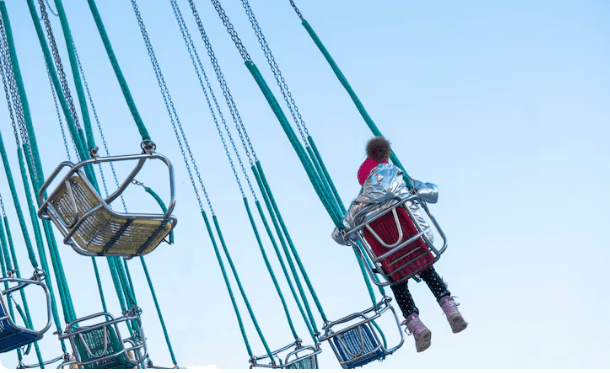
For most protocols, the most directly relevant failure point is the restraint verification. Every car’s lap bar, seat belt, and over-the-shoulder harness is physically inspected for wear on the mechanical parts that provide the real retention function, secure locking, and proper manual release function. A restraint that appeared to be in good condition yesterday might have developed an issue overnight. Nothing from the sign-off from the previous day is assumed to be carried over by the inspection. Every check is done from scratch, and the person doing it is responsible for the outcome in the logbook they will sign at the conclusion of the procedure.
Mechanical systems receive a comprehensive sequence of their own. Look for unusual wear, damage, or debris that might have arrived overnight by walking or visually inspecting the track surfaces. Wheel assemblies and guide rails were examined for condition and clearance. Drive cables and chains are examined for signs of fatigue or fraying as well as appropriate tension. Pneumatic and hydraulic system pressures are checked against operational requirements; these systems regulate braking and restraint mechanisms, and pressure outside of the proper range is a serious problem. Modern coasters’ galvanized steel structural components are resistant to corrosion, but connections, fasteners, and moving parts still need to be visually checked to make sure nothing has moved or become loose since the last day of operation.
Testing of the electrical and control systems occurs concurrently with or right after the mechanical inspections. E-stops, or emergency stop buttons, are physically pressed and timed. The right physical result must be achieved and the reaction must be prompt. Block sensors that control train placement on the circuit are verified. Confirmation is given to limit switches that specify the physical bounds of moving parts. After that, the empty test cycles start. The ride goes through its entire sequence without any passengers, including gate closure, while technicians watch from various observation points to make sure that every automated sequence—such as barrier positioning, dispatch command, block brake release, and station entry—occurs as intended and in the right order.
The signed logbook requirement at the conclusion of this process has some clarification. An operational and legal record of what was checked, by whom, and when is created by filling up and signing a tamper-evident inspection log prior to the first visitor boarding. The log is included in the investigation if something is found during operation that should have been found during the pre-opening check. The responsibility is documented, dated, and linked to the ride’s compliance history; it is not merely theoretical. Inspectors operating under such system are aware that their signature constitutes a formal, maybe legally binding declaration that the protocol was strictly adhered to. By design, the thoroughness is motivated in part by that weight.
