


Being highly qualified for a job and being told that your qualifications don’t exactly count here might cause a certain kind of aggravation. That frustration has long been a reality for pool lifeguards who travel between Commonwealth nations. Sitting down at a pool in Toronto, a licensed lifeguard who received training in Brisbane discovers, perhaps surprisingly, that their credentials must be reevaluated before they can lawfully work a shift. The abilities are identical. It’s the same water. However, the paperwork is not transferred smoothly.
The RLSS Commonwealth Pool Lifeguard Reciprocity Project aims to bridge that gap. The study, which was started by Royal Life Saving Society organizations in Australia, Canada, South Africa, and the UK, thoroughly examined the parallels and discrepancies between each nation’s pool lifeguard training programs in order to determine what actually overlaps and what doesn’t. As a result, there is now a more straightforward approach for certified lifeguards to move between these four nations without having to start from zero. However, the procedure still requires proving prior knowledge and, frequently, completing additional country-specific training before accepting a position.
There is a valid justification for maintaining those country-specific components. The laws governing lifeguards in New South Wales and Ontario differ from those governing lifeguards in the United Kingdom. Local environmental conditions also differ; different jurisdictions have different water quality regulations, facility layouts, emergency procedures, and even legal requirements for aquatic operators. These actual distinctions would be obscured by a general “your certificate works anywhere” strategy, and making a mistake might have catastrophic repercussions. Thus, the reciprocity framework carefully balances identifying what is shared, demanding what is locally required, and lowering the barrier without completely removing it.
In theory, that balance makes sense, but it’s important to remember that the four nations currently covered by the accord are also among the Commonwealth’s most resource-rich and institutionally comparable. It is substantially more difficult to extend such frameworks to countries in sub-Saharan Africa, South Asia, or the Pacific Islands, where drowning rates are significantly greater and aquatic safety infrastructure is much thinner.
According to the RLSS Commonwealth’s own data from July 2025, the African region has a fatal drowning rate of 5.4 per 100,000 people of all ages, with a rate of 15.8 per 100,000 children under five. Bangladesh’s rate is 35.2. These are the locations with the greatest need for certified aquatic safety specialists and the least developed infrastructure for credential recognition. An important first step toward a working reciprocity framework is the national drowning prevention network being developed by Pakistan Life Saving, an associate of the RLSS Commonwealth.
This is made worse by the larger workforce issue. Since the pandemic disrupted training pipelines and reduced the customary pool of seasonal personnel, aquatic facilities around the world have been facing a continuous lifeguard shortage. Although the percentage of aquatic facilities reporting staffing gaps decreased from 67.3% in 2022 to 41.8% in 2024, a sizable chunk of the sector continued to operate below safe supervision levels. More facilities have been forced to cut hours or close pools completely due to the scarcity, especially in areas that depend significantly on younger seasonal workers. In that sense, mutual recognition frameworks serve as a tool for labor mobility by enabling trained lifeguards to follow demand across borders during peak seasons instead of being idle at home during the summers in the northern and southern hemispheres.
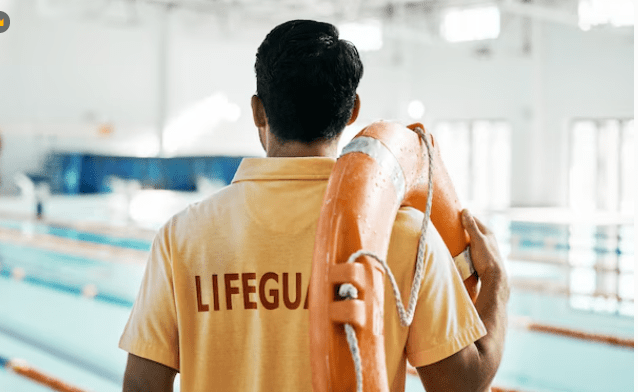
The drive to standardize credentials appears to be gaining momentum, albeit slowly and methodically. Over 95% of lifeguards in the UK are already covered by the RLSS UK’s National Pool Lifeguard Qualification, which can be administered in other nations where trainers adhere to RLSS UK criteria. Even in situations when complete reciprocity isn’t yet in place, the International Life Saving Federation establishes baseline competency standards that member organizations adhere to, creating at least a shared floor. These are significant accomplishments because it takes years of institutional work across institutions with various funding mechanisms, governance structures, and regulatory settings to establish any type of international alignment regarding safety credentials.
