


Someone is already squatting next to the rail with a torque wrench before the first train leaves each morning. Working thru the inspection list, which begins at the safety-critical connections and proceeds gradually outward, rather than inspecting every bolt—there are thousands of them across a large coaster layout. The mechanic is aware of which joints have the largest cyclic loads, which fasteners are most likely to have migrated overnight, and which parts of this particular ride have a history of needing maintenance. The list is not made at random. It was constructed using manufacturer requirements, engineering documentation, and years of operational expertise with the behavior of this unique structure.
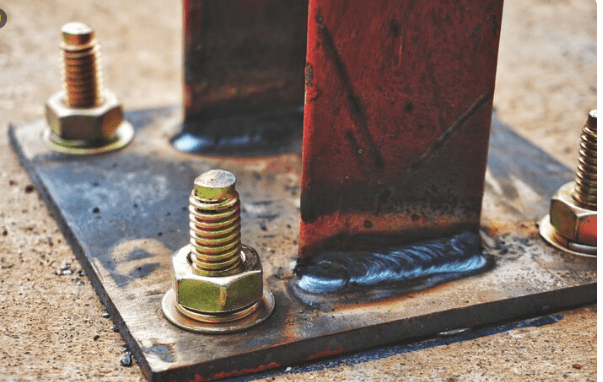
A roller coaster track fastener is not performing a straightforward task. Repeated loading cycles that combine high compressive forces as a heavily loaded train passes over a joint, vibration from the steel-on-steel contact, thermal expansion and contraction from changes in ambient temperature over the course of a twelve-hour operating day, and the sporadic shock load from a hard wheel impact or a brake application that didn’t quite go as smoothly as usual are what keep components together. Vibration-induced loosening is the process by which a threaded fastener progressively pulls out of its hole when any of those inputs are applied frequently enough. Last nite, the fastener was tight. It has turned a fraction of a turn in the wrong direction by this morning. That is a serious issue.
The event at Cedar Point’s Top Thrill Dragster in 2021 serves as the best example of what might happen when a fastener fails. During operation, a capscrewed metal bracket—an L-shaped proximity flag plate fastened to a bogie frame on one of the trains—backed out and detached from the vehicle. A visitor in the line below was hit by it. Rachel Hawes, the visitor, was permanently disabled due to a catastrophic brain injury. According to the Ohio Department of Agriculture’s inquiry, the fastener was secure after being examined the previous evening. According to the inquiry, the failure happened under operating load due to an instantaneous overload fracture, which can happen when a fastener that is already slightly loose encounters a load that is more than what the reduced preload can withstand. Everything had been done correctly by the inspection. Nevertheless, the failure occurred.
Every maintenance specialist who works on high-speed amusement rides must deal with such result since it characterizes the most difficult type of failure—one that happened in spite of proper procedure rather than one that happened due to carelessness. This type of risk requires a multi-layered solution. Fasteners that have backed out sufficiently to be visibly loose are caught by torque verification, which uses calibrated torque wrenches to ensure that fasteners are tightened to the manufacturer’s recommended value.
Visual inspection reveals clear issues such as missing cotter pins, rust staining around a fastener head that indicates movement, and broken threads evident at the joint face. In order to find internal cracks in crucial bolts that would not be apparent from the outside, ultrasonic testing digs deeper. Additionally, thread-locking compounds, double-nut configurations, castle nuts with cotter pins, nylon-insert nuts, and other locking mechanisms are applied in conjunction on safety-critical connections to make backing out mechanically more difficult in the first place.
The technical wording used in amusement ride engineering regarding fastener specs may not always convey to outsiders how important they are. Fastener grades, torque restrictions, and the circumstances in which locking mechanisms are necessary are all outlined in ASTM F2291, which regulates the design of amusement rides and equipment. The operational side is covered by ASTM F770, including what inspections are required, how often they must be conducted, who is certified to conduct them, and how the results are recorded. The documentation aspect is more important than it may appear. For example, a fastener issue that keeps coming up at the same spot after several inspection cycles is a pattern, and patterns are what separate a random occurrence from a structural issue that requires engineering attention instead of a tightened wrench.
Continuous monitoring is what’s being produced in the industry’s periphery, slowly and without the excitement of a new ride launch. Before a fastener reaches a critical state, vibration sensors positioned at high-load fastener positions can identify the acoustic signature of a fastener loosening under cycle stress. The technique is used in industrial and aeronautical settings. Because of the expense, the difficulty of managing sensor data over thousands of fastener positions on a large coaster, and the certification procedures for acting on that data, it hasn’t become conventional in amusement ride maintenance. The direction is quite obvious. The difficult part is the implementation.
