


On an August morning, Windermere is very quiet. There is mist on the water, and every once in a while, a boat moves slowly across the surface. A couple walks their dog along the shore. It doesn’t seem like a settlement. It looks and feels like the best place to be.
There are more Britons who feel that way now than at any other time in recent memory. This summer, more than 25 million people are not going on vacation abroad. Instead, they are taking breaks at home. Along with Devon, Cornwall, and the Peak District, the Lake District is at the top of the list. There are more reasons than just money.
Cost is the most obvious reason. Due to problems in the Strait of Hormuz, where about three quarters of Europe’s aviation fuel goes, jet fuel prices have gone up sharply. Airlines are saying that flights may be canceled. Right now, airports are already full. Barclays found that UK consumers spent 3.3% less on travel abroad in March than they did the previous month. This is the first drop of this size since 2021. Seventy percent of people polled said they were worried about rising travel costs. In that case, money does matter. It may not be the whole story, though.
61% of adults say they’re more likely to choose a staycation this year than last. One third of them say it’s because they want to “explore the UK,” not because it’s cheaper. Some changes are happening in the way people think about holidays. It seems like people are losing the idea that traveling abroad is always better and more rewarding. Vacations at home are no longer seen as a last resort.
The lodging business has taken note. In the last few years, the self-catering industry has clearly stepped up its game. It is no longer just basic cottage rentals, but more like boutique hotels. You no longer feel like you have to ask for fast Wi-Fi, EV chargers, coffee machines, or nice sheets when you stay in a hotel. One holiday company in Yorkshire said that bookings went up by 17%, with most people choosing to stay in rural areas. Over Easter, Sykes Holiday Cottages saw an 18% increase in bookings, and they expect this trend to continue all summer long. Windermere, Keswick, and Ambleside will be especially popular.
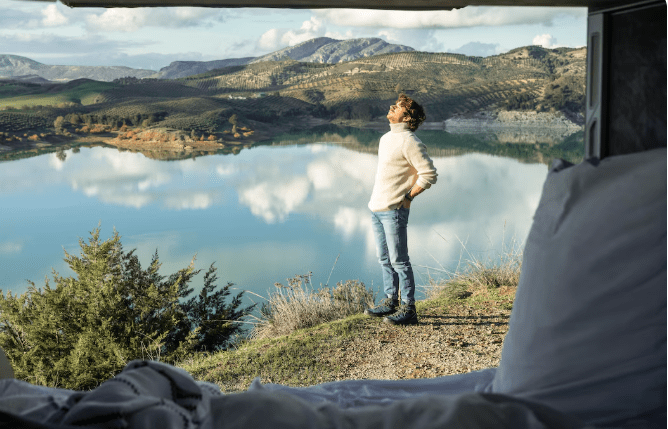
When people come, it’s important to pay attention to what they say they’re looking for. It seems like “local immersion” is the theme for 2026. People are shopping at farm stands, finding trails that aren’t marked on the main tourist maps, and eating at a village pub that doesn’t have a QR code menu. Swimming in the wild. Walked down. Foraging. These aren’t activities on the edge. They’re part of a larger desire to travel more slowly and deliberately. Some people really want to be somewhere instead of just passing through it.
In all of this, social media has played a strange and sometimes contradictory role. Travel influencers have quietly done more to surface the UK’s lesser-known corners than any national tourism campaign in recent years. Northumberland, Pembrokeshire, and the Derbyshire Dales are just a few of the places that people from the area are now seeing in their feeds and shortlisting. Airbnb saw a 15% rise in searches in the UK, with these three places being the most popular. People still trust word of mouth, but the algorithm is now a close second.
The Lake District, though, remains the headline act. It has two spots in this year’s top five UK staycation spots, and earlier this year searches were said to be up 130%. Why is not hard to understand. One can go kayaking, ghyll-scrambling, cycling, abseiling, or they can just walk up a steep hill and sit at the top for a while. One hospitality business in the area said that bookings are 30% higher than they were a year ago.
It’s still not clear if this summer will change the way Britons think about vacations for good. As soon as the price of gas levels off, some people will start booking trips to Europe again. But there’s a feeling that something has changed that’s hard to put into words but easy to understand. It was always a go to the Lake District.
