


An amusement park is an odd place to be at four in the morning. It’s empty in the middle. It’s dark at the food stands. If the wind is quiet, the only sound is the sporadic creak of steel expanding or settling in the dip in temperature before dawn. A person wearing a harness is traveling the track, inspecting bolts, testing sensors, and searching for anything that shouldn’t be there somewhere above it, perhaps 200, 300, or even 400 feet up a latticed lift hill.
People who engage in coaster walking don’t receive much notice from the general populace. Their task is invisible by design and must be completed before the throng come. Nothing noteworthy occurs on a nice morning. The track walker is back on the ground working through the next structure by the time the first visitors line up once everything is checked out and the ride is cleared. It is unglamorous in the same way that the majority of truly significant labor is unglamorous. It is only because someone climbed up there first that the outcome that matters to everyone—a day of safe rides—occurs.
Harnessing up is the first step in the work, and it’s a really important process. Hard helmets, communication radios, non-slip boots, full-body harnesses, and fall-arrest lanyards attached to anchor points on the building. A burst of wind can be confusing at elevations above 300 feet in ways that don’t apply on the ground; the structure sways considerably, though not dangerously, and that requires some adjustment. No matter how many times they’ve done it, workers say the feeling of walking onto a lift hill in the early dark never quite becomes second nature. The height never ceases to exist.
They are searching for something precise and systematic up there. The hinged metal catches known as anti-rollback dogs, which stop a train from sliding backward down a lift hill, are inspected for wear and functionality. The track spine’s fasteners are inspected for tightness, and anything that has vibrated loose during the previous operating day or nighttime is looked for. Chain drives are examined for lubrication and strain. Because the digital control systems that regulate a ride’s operation are only as dependable as the physical sensors providing them with data, sensor alignments are validated. The trains’ wheel assemblies are inspected for wear patterns that could point to unequal loading or the emergence of bearing issues. This is not a fast process. It can take hours to walk a single coaster with a complicated layout.
The 2021 incident at Cedar Point’s Top Thrill Dragster, in which a metal plate broke off from a train mid-ride and struck a passenger in line, resulting in a catastrophic brain injury, painfully illustrated what occurs when a component malfunctions between inspection periods. Investigators discovered that the plate was secure and had been examined the previous evening. The breakdown was characterized as a “instantaneous overload fracture,” which can happen when a component’s cyclical stress eventually surpasses its threshold in a way that isn’t obvious from the outside. The mechanic had completed the task accurately. In any case, the part failed. Every maintenance professional in the field is affected by that result in one way or another because it clarifies what they are dealing with, which is not carelessness but rather the intrinsic unpredictability of metal under frequent, high loads.
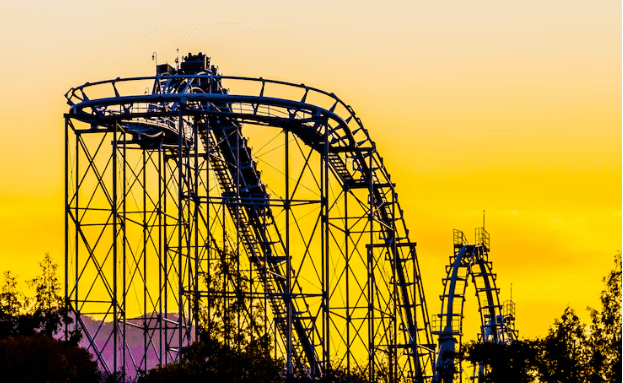
The industry calls this operation “walking the coaster” instead of “inspecting it” for a reason. The actual act of moving over the structure with your hands and feet in contact with it and your body close enough to detect the things that instruments could miss is what the term “inspection” fails to adequately describe. Subsurface cracks are detected via an eddy current tester. A track walker picks up on things like a wheel assembly sitting a few millimeters off-center, a tiny scratch mark on a rail segment that wasn’t there yesterday, or the faint sound of a fastener that’s just a little bit different from the others. The pre-dawn ascent is more than just usual paperwork turned vertical because of this observational layer, which is tactile, physical, and based on cumulative experience with how a particular bike reacts over time.
