


The spinning lights of a Waltzer against a black sky, the glow of the Ferris wheel’s rim rising slowly upward, and the entire midway lit in a way that makes an ordinary field seem worth traveling for are just a few of the nighttime sights that people remember for years. The majority of tourists never consider the source of all that movement and light. Usually powered by fuel from generators parked somewhere behind the booths, it vibrates steadily in the dark. And everything it powers is instantly and completely affected when one of those generators fails, which happens.
A power outage at a restaurant or shopping center is not the same as an abrupt blackout at a mobile carnival. The situation is not the same. There might be kids riding a Ferris wheel at the top of its cycle when a generator fails. Some riders may be in the middle of a spinning ride and need to stop safely with regulated deceleration. On an uneven field with heavy machinery and fuel storage nearby, a gathering of several hundred people may suddenly lose its lighting. Well-managed carnival operations put a lot of work into avoiding the situation of trapped riders, complete darkness, and a confused crowd.
In retrospect, the reasons behind generator failure are largely predictable. The most frequent is overloading, which involves operating more rides, lights, and sound systems than the generator’s rated capacity was designed to handle, particularly as the evening goes on and more attractions turn on at the same time. Overheating comes next, especially on hot summer days when the generator’s thermal margin is diminished by the surrounding temperature and any blockage to airflow immediately exacerbates the situation. Fuel starvation, which includes drawing from a tank with a blocked line or running low without realizing it, stops a generator just as forcefully as any mechanical breakdown. Additionally, there is the issue of cumulative wear: generators used in traveling carnivals put in a lot of hours over the course of a long season, and parts that weren’t examined or changed begin to break when the load is at its peak.
For operations that take this seriously, the conventional preventative strategy consists of multiple levels. Redundancy is the most basic: an automated transfer switch that detects a failure on the primary unit and activates in a matter of seconds rather than minutes, connecting a backup generator that can carry at least the necessary load. Those seconds are important. In the event of a primary failure, emergency lighting and safety systems remain operational thanks to a two-second switch to backup power. Managing a five-minute manual switching operation in the dark when a crowd is already responding to the outage is far more challenging. For many years, hospitals and data centers have been using automated transfer switches. Their uptake has been less steady in mobile carnival operations.
Another essential component of responsible generator management is daily pre-opening inspections, which may seem apparent until you take into account how compressed and pressured the setup window is usually. It takes time to check the levels of oil, coolant, and fuel; run the generator under load prior to the first ride starting up; examine exhaust clearances and cooling flows; and confirm that electrical connections haven’t vibrated loose during transit. The generator check may seem like a simple task to postpone on a morning when the team is also installing rides, inspecting restraints, and having everything working before opening. Additionally, it is the check that determines whether or not the evening remains orderly.
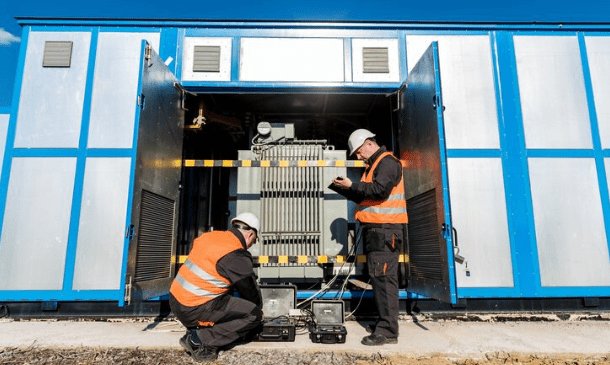
The third component is load management, which has become more useful as digital monitoring technology has been reasonably priced for smaller businesses. Operators can see whether they are getting close to the generator’s rated capacity by using real-time power meters that display current draw across several circuits. The system is prevented from reaching the point where the generator is making decisions for the operator by load-shedding protocols, which are agreements regarding which lighting is lowered or which less important attractions are turned off first when the load increases. When that decision-making is left to the machine, it typically leads to a total cutout rather than a smooth load reduction.
