
A man in a polo shirt is unrolling a big inflatable slide from the back of a trailer on a Saturday morning in a church parking lot in a mid-sized Ohio town. Beside it, the blower motor remains in its case and rests on the pavement. Volunteers are putting lights between the light posts and setting up folding tables around him. The orange and yellow, castle-shaped slide appears joyous and simple, and it is intended for kids under ten. The folder on the passenger seat of his truck, which has the legal authorization for this item to be inflated, used, and occupied in this specific parking lot on this specific day, is less noticeable.
At a community fair, the paperwork trail behind an inflatable slide is significantly longer than most guests would think if asked, and longer than most fair organizers expect when they first try to set one up. A special event permit, which is submitted to the local municipality weeks in advance of the event, initiates an evaluation of the planned location, the kind of attraction, the target audience, and the operator’s qualifications. Each jurisdiction has a very different review procedure. It can be processed in a few days in some towns. Others call for a site visit and several weeks. When organizers find out about this need the week before their event, they usually don’t have enough time.
Although it is not negotiable for any authorized seller, the insurance layer is distinct from the permit. Before agreeing to the rental, the venue or event organizer usually needs to confirm that the inflatable operator’s Certificate of Insurance shows active general liability coverage at a level acceptable to the hosting organization. This is where unanticipated complexity can occasionally arise in smaller community events. The general waiver papers that participantsf sign are unlikely to completely protect the organizing group from exposure caused by a vendor with inadequate coverage or one whose insurance has expired. The COI is not a formality. It is the document that establishes financial responsibility in the event that something goes wrong.
An additional layer is added by site documentation. In most regulated situations, a layout design outlining the inflatable’s placement in relation to power lines, trees, fencing, traffic routes, and other attractions is necessary prior to setup. The proximity requirements are in place because blower motors need certain clearances from electrical sources, inflatable constructions might move in the wind, and an emergency deflation requires a clear space around the perimeter for a safe evacuation. If the layout is approved ahead of time, the setup team won’t have to make such choices on the morning of the event while volunteers are waiting in line.
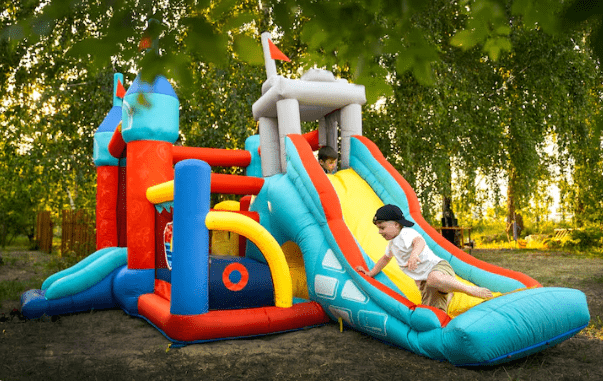
After the equipment is put together, the daily inspection log is kept up to date for each day of operation. Before the structure is made available to participants every morning, blower function, anchor points, fabric condition, and seam integrity are all examined and recorded. An anchoring certification is a distinct document that attests to the fact that the particular anchoring technique—such as water weights that satisfy a rated capacity or steel stakes driven to a necessary depth—has been confirmed to be suitable for the ground surface and anticipated wind conditions at that location. At locations where anchoring was insufficient, inflatable constructions have been airborne during wind events, and it is exactly because of these incidents that this requirement has a documentary trail.
