


A thermal spring that has been around quietly for more than one hundred years all of a sudden becoming a place that people drive two hours to see because they saw a 30-second video on their phone is almost funny. About the same thing happened at Parakai Hot Springs, or Kaipātiki Hot Springs as it has been officially known since January 1, 2026. It is a geothermal retreat about an hour northwest of Auckland, close to the small town of Helensville. Families, locals, and people on road trips have been going there for decades. Then TikTok came along.
The timing is interesting, even if it’s not a complete accident. At the end of December 2025, the hot springs officially changed hands from the long-running Parakai Springs Complex Limited to Te Poari o Kaipātiki ki Kaipara, a governance body chosen by both Ngāti Whātua o Kaipara and Auckland Council. The original name for the area was Kaipātiki, which means “a lot of pātiki,” or flounder. This name was used before the confusion during the colonial era that led to the Parakai reversal in the early 1900s. Young people online seem to find that origin story strangely interesting.
It’s possible that the change in name itself made people curious. There is a certain way that TikTok works: a well-known thing gets a new name, the backstory turns out to be surprisingly deep, and all of a sudden, the algorithm decides that everyone needs to know about it. It’s easy to make videos that look nice, like ones that show the outdoor pools bubbling with water, the water slides, and the soft fog that hangs over the geothermal surface at night. And short-form video beauty tends to go places.
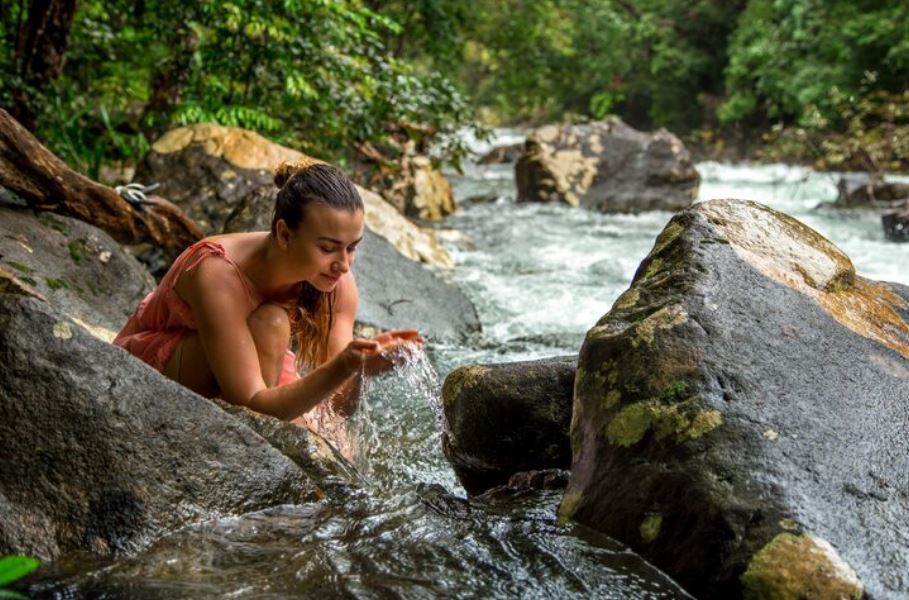
There has always been a strong following for New Zealand’s hot springs culture, especially among locals who use places like this as handy weekend therapy rather than tourist attractions. Most of the world’s attention is on the larger geothermal belt around Rotorua and Taupō.
This belt has volcanic pools that can get very hot, and the Māori used them for cooking, healing, and getting together with their communities. This high-voltage circuit doesn’t go all the way to Kaipātiki. It’s less busy, closer to Auckland, and more likely to attract families with children than backpackers looking for adventure. The same people have always gone there. What it didn’t have until recently was a group of people to watch it.
It’s possible that the TikTok wave has brought to light a place that has real cultural weight, but it’s not clear who planned it or why. The head of Te Poari o Kaipātiki ki Kaipara, Mihi Blair, has talked about how her family has a strong connection to the site. In the past, Ngāti Whātua tūpuna used the thermal waters to heal and recover. People don’t always include that background in the short videos that go around social media, but it’s there for those who look a little deeper. Some people do, too.
It’s anyone’s guess whether that attention will last. Moments that go viral are tricky. It’s possible that the summer crowds that came over New Year’s 2026 will not come back at the same rate. There were so many people there that the change in management was barely noticed. Long-term plans for the site include restoring the environment, adding cultural programming, and making the site easier to get to. These plans are all geared toward the next fifty years, not the next news cycle. It seems like Te Poari is thinking about the next generation, while the internet will be talking about something else by Thursday.
Still, there’s something interesting about this. A place that has been there quietly for generations with a name that was changed because of a problem with sorting mail a hundred years ago has now been given back its original name, just as a new generation began to pay attention. That story wasn’t made up by anyone. That’s what really took place. That’s sometimes the most interesting kind of story there is.
