


After almost a year of renovation, the gate to the recently restored Labubu Forest Zone opened inside Chaoyang Park on the morning of April 30, 2026. Families with small children were present at the opening, but there were also a lot of adults in their twenties and thirties who had their phones out before they even entered the building. Some of these individuals had come to Beijing from other provinces especially for the occasion. More precisely, they were there for the stuff rather than the rides.
The unique product that transformed Pop Mart from a mid-sized Chinese retailer into a well-known brand is the park-only Labubu blind boxes, which are tiny collecting toys in sealed packaging. The Beijing park is more than just a theme park to the collectors who wait in line outside Pop Mart stores in Seoul, New York, and Kuala Lumpur on drop days. It is the origin.
Although Pop Land, formally known as Beijing Pop Mart City Park, has been running in some capacity since 2023, the year-long renovations that saw a partial reopening on April 30 mark a significant advancement in the park’s goals. The new attractions, which are centered around the Pop Mart IP library of Labubu, Dimoo, and The Monsters characters and include a pirate ship, a drop tower, and a carousel, turn what was formerly a merchandise experience with some amusements attached into something that more accurately serves as a theme park.
The live stage performances, such as the Elf Warrior Training Camp shows where attendees can be chosen to engage with Labubu mascots, are the type of planned programming that entices people to stay for four to six hours instead of passing by, purchasing their blind boxes, and walking away. Pop Land was just a branded store with rides, but the refurbishment closes the gap between that and what the company’s global goals demand of it.
This expansion has a substantial financial context. In 2025, Pop Mart’s overall revenue nearly tripled to 37.12 billion yuan from 13.04 billion the previous year, and its profit increased by 308%. This is what happens when a collectible toy brand enters the realm of global cultural saturation: Labubu’s face can be seen on celebrities’ purses and teens’ keychains in twelve different nations, creating the kind of organic marketing that no advertising budget can consistently provide.
Pop Mart is attempting to turn that moment into long-lasting intellectual property (IP) with the Pop Land expansion, which is taking place concurrently with a Labubu animated movie that is being developed with Sony Pictures. Owned characters are the kind that generate revenue across toys, experiences, media, and licensed merchandise for decades rather than peaking in a single viral cycle. The Sony movie and the Phase II construction in 2027 are essentially banking on whether Labubu has the longevity of a Disney character or the trajectory of a transient collector trend.
The most striking aspect is the demographic data from the reopening: 58–59 percent of Pop Land visitors are non-local, meaning they came to Beijing especially to visit the park rather than viewing it as something to do while already in the city. Because it indicates if the location is drawing tourists or only attracting foot traffic from the neighborhood, serious theme parks utilize this figure as a standard. It’s a stronger-than-expected number for a park inside a city park in a major metropolitan area, and it shows that collectors are willing to plan trips around the availability of exclusive merchandise, something that more casual theme park visitors typically don’t.
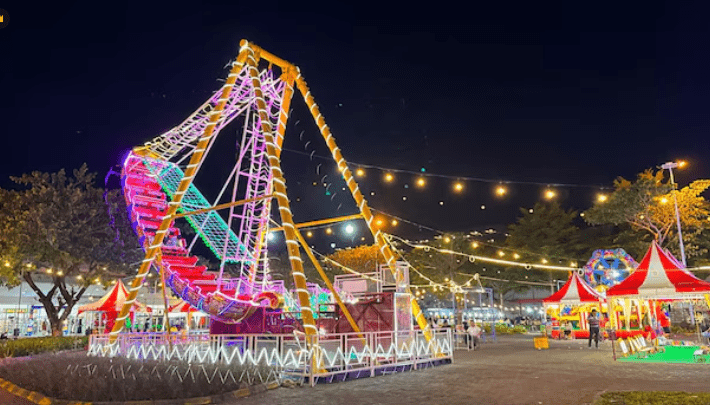
Alongside the reopening, Pop Mart revealed plans for expansion, including many other Pop Land parks in negotiations with Chinese towns and an integrated resort idea for future development. According to VP Jeffrey Hu, every successful character-driven experience business has replicated the model outside of the flagship after the flagship proves it can be run reliably.
Jing Daily has been questioning whether Pop Mart is turning into China’s Disney; a more intriguing version of that question is whether the brand’s current revenue-generating collector base will continue to be active as Pop Land transforms into a more traditional theme park and less exclusive merchandise destination. How that tension is resolved is still unknown. On the day of opening, all of the Labubu Forest Zone items was sold out. In 2027, Phase II will begin.
