


In Byron Bay, there’s a certain kind of anger that builds up over time. It does not make itself known all at once. Over years, it adds up to things like extra traffic, rental prices that doubled without warning, and strangers filming your morning coffee like it’s a prop. When Netflix said it would be filming Byron Baes, a reality show in April 2021, they called the town a playground for “hot Instagrammers living their best lives.” At that point, something in the community finally broke.
Over 6,000 people signed a petition calling for a film ban right away. Businesses in the area refused to work together. The mayor of the Byron Shire said the show was “offensive.” From the outside, what seemed like an overreaction to a reality show was really the last straw for the people who lived there.
Byron Bay is a town on the north coast of New South Wales, Australia. It has about 10,000 people and is known for its surf beaches and a certain kind of ease that used to feel earned rather than curated. For many years, artists, backpackers, and people who just wanted to get away from something—the city, the noise, the pace—came there. That group is not the same as the ones who are coming today with ring lights and brand partnerships.
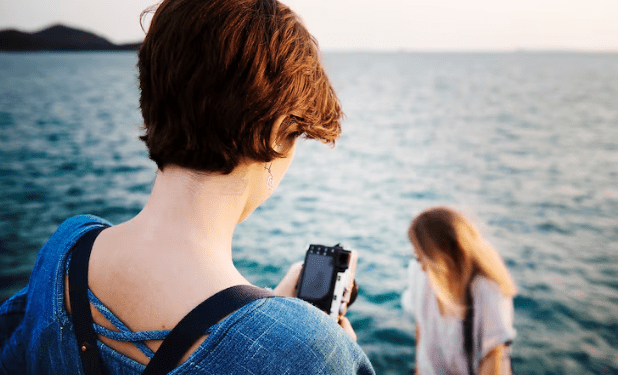
The change took time. Because of social media, places like Byron Bay became popular not because of what they had to offer but because of what they looked like in pictures. The beach was used as a background. The way of life turned into a mood board. And the people who had built lives there were priced out and over-aestheticized, living in someone else’s content whether they liked it or not.
Mayor Simon Richardson of Byron Bay was on to something when he said that the town’s public image was like The Truman Show: it had a well-lit front, but behind the set was a community that was having a hard time. Affordability of housing has gotten a lot worse. The rent has gone up a lot. Short-term rentals chasing the influencer tourist have forced out long-term residents. These are not general statistics. They’re people who grew up in that town and are seeing how the Instagram version of it is becoming less and less like the real one.
It’s harder to figure out what happened in Byron Bay because there wasn’t just one bad guy who did it. People in the area pointed to Netflix. Some people were mad at Chris Hemsworth and Zac Efron, whose arrival in town gave it a shiny look that it may not have wanted. But writer Anna Lockwood, who used to live in Byron Bay, made a good point that gets lost in all the anger: Instagram changes all of this every day without a press release. Every time a photo is filtered, tagged with a location, or given an aspirational caption, it turns the photo into a product. There’s no need for a film crew on the platform.
Something feels wrong about that observation, in part because it involves almost everyone. Even tourists who don’t mean any harm get to Byron Bay having seen a version of it that isn’t quite how they imagine it. They’re after a feeling that was made by an algorithm and is kept up by people whose jobs depend on it.
But it’s still not clear if Byron Bay can really take back a lot of control over its image. There isn’t enough of a break from tourism in the local economy. However, it looks like a community is slowly but surely saying that it is more than just scenery. That there really is a housing crisis. That the stress that’s going on behind Instagram is real. That being someone’s perfect background and a town that works and people want to live in are getting harder and harder to achieve at the same time.
The people who live there don’t mind visitors. They don’t want to erase things. There is a difference, and Byron Bay wants people to see it, even if the algorithm would rather not….
