


Since 1935, the happy smile at Luna Park Sydney’s entrance has been beaming across the harbor. The enormous clown mouth through which visitors enter the park, the Art Deco buildings on either side, and the backdrop of the Harbour Bridge, which is so close that the steel lattice covers the sky behind it, are some of those pictures that people who have never been to Sydney may nevertheless recognize. The state heritage register has the face on file. It’s not going anywhere. The park has been trying to figure out how to turn something so outdated and repaired into a 21st-century recreational destination.
For now, the solution consists of a 3,000 square meter immersive entertainment area constructed inside the Big Top arena, holograms, spatial audio, and $15 million worth of Barco projection technology. The Big Top’s makeover is the biggest single investment Luna Park Sydney has made in recent years, and it represents a wager that immersive rather than purely physical experiences are more likely to capture the interest of younger guests—digital natives who have grown up with high-production-value content available on demand. Instead of being remarkable by the standards of a theme park attraction, Dream Circus, the multisensory show that serves as the focal point of the new area, is intended to be truly astounding. That is an alternative design goal.
The park’s current assortment of thrilling and family-friendly attractions is complemented by the new ride, the single-rail Big Dipper roller coaster. It symbolizes a more traditional approach to park investment: add a coaster, give visitors a fresh reason to visit, and show that the collection of rides is expanding rather than stagnating. However, the Big Dipper doesn’t fully convey Luna Park’s goals. The more significant strategic decision is the investment in immersive technology, which shows that the park views its rivals as more than just other theme parks. For a generation accustomed to gaming, streaming, and interactive media, any experience that fails to captivate them is the true rival.
It’s important to recognize that Coney Island has remained virtually unaltered rather than taking it for granted. Slower, more tactile, and purposefully nostalgic than Dream Circus, the 1930s funhouse features mirror mazes, wooden slides, and physically interactive attractions that haven’t altered much in decades. Although their coexistence in the same park may seem illogical, it actually reveals something about the viewers. Parents bringing their own childhood memories, grandparents recalling the first time they visited Coney Island, and kids experiencing it for the first time are among the families that visit Luna Park. Maintaining Coney Island while constructing Dream Circus acknowledges that the park serves all three at the same time.
As usual, a large amount of the work is done by the location. Milsons Point, which is just a short train trip from the city and a few steps from the harbor with the Harbour Bridge as a literal backdrop, doesn’t require any additional encouragement. It doesn’t take a ride to make the experience worthwhile when you stroll into Luna Park on a clear Sydney evening and see the lights of the Bridge and the Opera House across the river. The park’s most valuable feature is its environment, but it also presents a bit of a problem because occasionally guests come expecting the site to be the experience and depart without interacting with what the park has truly created.
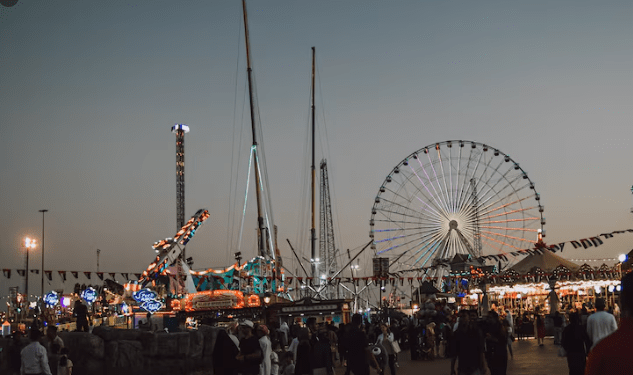
There are real limitations on what can be altered because of the heritage laws that safeguard the Coney Island architecture, the Art Deco towers, and the smiling face. From a different perspective, they are also a competitive advantage. A typical family entertainment center in a suburban parking lot is not the same as Luna Park Sydney. No amount of investment by a rival can duplicate ninety years of operation in one of the world’s best harbor settings; the history is literally in the architecture. The new coaster and the $15 million immersive investment are not meant to replace that legacy; rather, they are constructed alongside it in an effort to provide a reason for a generation that mostly interacts with screens to cross the harbor and see the happy face in person.
