


The green is the first thing you see when you drive down from the escarpment into Jamberoo on a sunny summer morning before the park even appears. The Southern Highlands appear to have been unaware that they are only an hour south of Sydney due to the dense subtropical bush that covers the Illawarra escarpment, which rises sharply to the west. The valley floor opens up, revealing dairy farms still operating alongside the road, paddocks with real cattle, and, beyond the parking lot, slides, towers, and the sound of kids making their usual noises when a day is going well.
Originally, Jamberoo Action Park was a dairy farm. In 1974, the Eddy family ran cattle on this property, and the development from that to grass skiing to waterslides follows an organic logic that isn’t really logic at all—rather, it’s entrepreneurialism reacting to topography. Natural elevation is provided by the escarpment. Elevation entails slides. Waterslides proved to be an excellent choice during the Illawarra summer, when it’s hot and muggy and Sydney families are searching for a Saturday destination other than Manly Beach. In 1981, the first waterslides opened. For over 40 years since then, the park has been expanding upon that foundation.
The combination of scale and ownership model is what makes Jamberoo truly unique in the NSW leisure market. This is not a modest neighborhood establishment that has endured by being inconspicuous and low-cost. Park designers from other continents travel to observe attractions like the Funnel Web water slide, which gets its name from the spider that can be spotted in the nearby bush. Jamberoo is positioned against parks that operate in larger markets with higher capital budgets thanks to the Velocity Falls precinct’s degree of aquatic thrill. Through a tube system that required significant engineering investment, the Rapid River transports thousands of visitors every hour. These top-notch attractions were created and run by a family-run company based in an Illawarra valley.
One of the factors contributing to the park’s decades-long loyalty is its all-inclusive admission model. You ride everything all day, pay once, and park for free. The Jamberoo approach removes the obstacles that make an enjoyable trip seem pricey in retrospect for a family figuring out the true cost of a leisure day out, which in the current economic situation entails the mental math of parking plus lunch plus extras. These days, parents who brought their kids here in the 1990s are bringing their kids’ kids. In park markets, this type of generational carryover is common, but it necessitates continuously upholding the level of experience that warrants more than just the first visit.
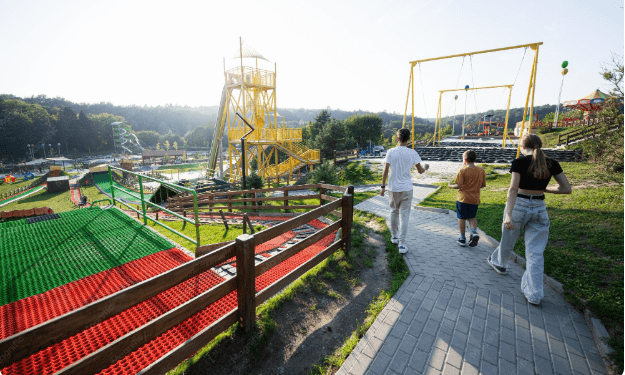
Photographs don’t adequately convey the scene. In several respects, Jamberoo appears to be in a separate temperature zone from the suburb you left that morning due to the escarpment behind the park. There is a change in the air. There is more vegetation. In commercial leisure settings, where the built-out footprint is often maximized at the expense of any feeling of the surrounding environment, the slide towers emerge from a terrain that nonetheless reads as natural rather than industrial. Even if they are unable to pinpoint the exact reason, Jamberoo’s ability to retain some of the farm environment from which it originated influences how tourists perceive the location.
