


On the eastern outskirts of the city center, Christchurch opened the Parakiore Recreation and Sport Centre on December 17, 2025. It was fourteen years and ten months after the earthquake that struck in February 2011, killing 185 people, destroying a large portion of the city center, and initiating a reconstruction whose scope and intricacy have defined Christchurch ever since. The timing wasn’t coincidental. One of the last significant Crown-led anchor projects from the post-earthquake recovery plan to be completed, Parakiore’s opening signified something that the city’s citizens, planners, and elected officials had been anticipating for so long that some of them had given up on it.
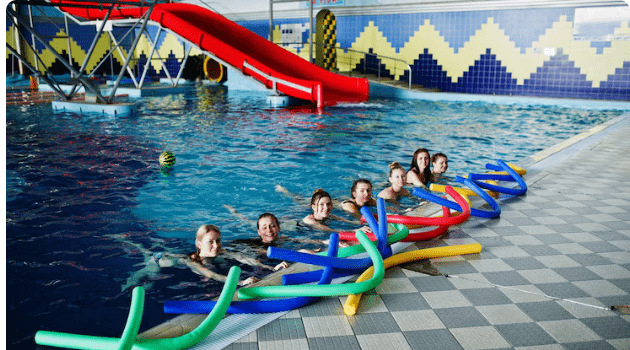
It’s a big building. 32,000 square meters were constructed on liquefaction-prone land employing foundation engineering, which Christchurch has, by necessity, become fairly proficient in over the last ten years. For the first time since the QEII Park pools were destroyed following the earthquakes, Christchurch is back in the running for elite aquatic competition thanks to the main competition pool, which is fifty meters, ten lanes, and FINA-compliant. It can hold national and international tournaments. A tower for deep diving. There are five hydroslides. There are nine indoor sports courts. The competitive facility is next to a 25-meter recreational pool. The first Sensory Aqua Centre in New Zealand was created especially for people who are neurodiverse and disabled. It offers environmental concerns that regular facilities do not, such as controlled lighting, reduced acoustic reverberation, and separate admission.
That final component is worth considering because it reflects a truly intentional aspect of Parakiore’s conception. Building a large aquatic center capable of hosting championships was not the only task assigned to the design team. The goal was to create something that the entire Christchurch community could utilize, particularly areas that the city’s current amenities have continuously neglected. Mainstream aquatic recreation has effectively excluded neurodiverse people who struggle with the sensory environment of a typical public pool, such as the echoing acoustics, the crowded changing rooms, and the unpredictable social environment. With specific session timings and physical design decisions that make the setting functional for those for whom a typical facility is not, the Sensory Aqua Centre directly addresses that exclusion.
The building’s architecture and name both reflect its connection to Māori identity. Rūnanga Te Ngāi Tūāhuriri and Ngāi Tahu, the local hapū whose ties to the Canterbury plains and the Avon River long precede European arrival, served as inspiration for the name Parakiore. At the end of the process, the cultural narratives incorporated into the facility’s design were not ornamental elements. They influenced decisions on how the structure interacts with the water, how it deals with the land it occupies, and how it displays itself to the surrounding metropolis. Although this type of collaboration in the design of public infrastructure has become more common in New Zealand since the 1990s, the extent to which it was used at Parakiore is noteworthy.
Alongside the civic and cultural case is the economic one. An estimated two million people are expected to visit the facility each year, which is a substantial number for a city the size of Christchurch. It puts the city in a position to bid on major national and international events (the Special Olympics Aotearoa has already been mentioned as an example of what the venue can support), and the ability to host competitions creates direct economic activity through spending on lodging, hospitality, and transportation that extends well beyond the facility itself. Since 2011, Christchurch has been methodically reconstructing its conference and event facilities, and Parakiore fills a gap in the sports and recreation landscape.
One type of storytelling is witnessing a city define itself through a building. It’s fairly obvious what Parakiore is saying about Christchurch in 2025: the city plans to be fully functional rather than just partially recovered, the rebuild is largely finished, and the communities that the earthquakes uprooted and disrupted should have access to a civic amenity that is truly excellent rather than just adequate. How the building is planned, maintained, and utilized in the years to come will determine whether it fulfills those goals in the long run. The statement was the opening. The proof is what follows.
