


Technically, the sky above the rides, food vendors, and throng is controlled on a busy Saturday night at a major summer fair in Germany, the Netherlands, or northern France. There shouldn’t be any unapproved drones present. EASA’s regulations are unambiguous: most consumer drone operators lack the prior authorization needed to operate an unmanned aircraft over a crowd. There is a regulation. The issue also does. Unauthorized drones have grown commonplace at major outdoor events throughout the continent due to the gap between what the rules state and what actually occurs over a crowded fairground on a warm evening, and the technologies for narrowing that gap are still catching up.
The problem’s scope has been growing for years. Since commercially accessible consumer drones became widely available and reasonably priced, drone incursions throughout the region’s airspace have steadily increased, according to Eurocontrol, which oversees European air traffic management. In 2024, the UK’s Airprox Board recorded a record number of drone-related near-miss reports. The majority of these incidents involve operators who either don’t understand the regulations, don’t believe they apply to their circumstances, or just determine that the aerial shot they’re attempting to capture is worth the risk of a fine. The reasons differ. The result is the same: an unmanned aircraft with a lithium battery and possibly several hundred grams of spinning rotors operating above a crowd without notice or defense.
It is unsettling to consider the mechanics of what might happen if a consumer drone fell into a crowd. The kinetic energy of a typical mid-range DJI drone, which weighs about 900 grams and travels at 50 km/h, is approximately equal to that of a bigger weight dropped from a significant height. Lacerating potential is added to blunt force by rotating blades that are still in motion upon collision, which they typically are because the failure mode is commonly a loss of control rather than a clean shutdown. There have been documented occurrences with falling drones at outdoor events that resulted in serious eye and facial damage. Because the likelihood of hitting someone rises as the area per person drops, the crowd density that makes a fairground profitable is the same density that makes a falling drone more dangerous rather than less.
A less obvious but no less significant aspect of the issue is emergency response. A drone operating below 500 feet in an area where emergency medical helicopters must respond can completely ground those aircraft, according to EASA’s own research. A single incursion can cause a HEMS response to be delayed by anywhere from fifteen to forty-five minutes while airspace is evaluated and cleared. Delays have immediate medical repercussions for major events where a cardiac emergency, a serious crush injury, or a falls incident may necessitate helicopter evacuation. It’s quite unlikely that the drone operator flying to capture footage of the Ferris wheel is aware that they might be grounding the air ambulance.
Operators of fairgrounds and festivals throughout Europe are in a difficult situation. Although they are responsible for the security of their facilities, they have little control over the legal and technological tools to deal with airborne assaults. The most effective immediate countermeasure, jamming drone communications, is prohibited for private operators in nearly all EU member states. Signal interruption technology can only be used lawfully by law enforcement and public organizations with special authorization. When a drone is noticed overhead, it is frequently impracticable to call the police since, by the time an officer arrives, the drone and its operator may have already left. The drone can only be identified if it is registered and the registration was accurately maintained, which is not always the case. Operators can be informed that a drone is there by detection networks that use radar, RF sensors, or auditory monitoring. They are unable to get it to go.
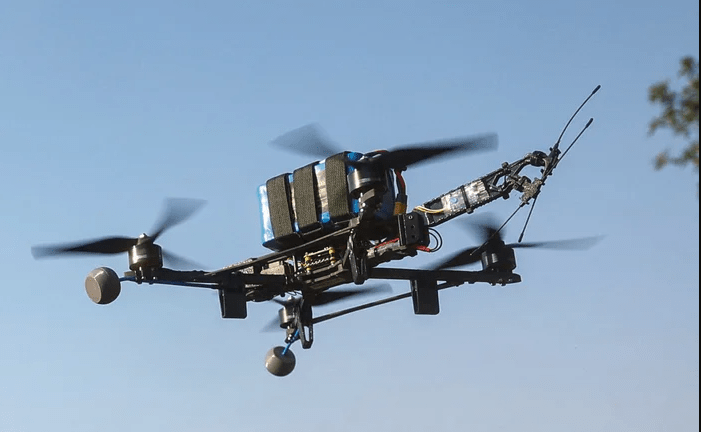
What could normally appear to be a simple nuisance issue has become even more significant due to the larger context. Drones operating in patterns consistent with surveying layouts, tracking personnel movements, or mapping physical access points have been the subject of increasingly documented systematic airspace violations near critical infrastructure by European security agencies and NATO members. These violations appear to involve reconnaissance rather than recreation. In recent years, the Baltic states have been very outspoken about this trend. Not every drone seen above a British county fair or a German Christmas market is intentional. However, some security experts now have a different perspective on what fairground operators are really dealing with when a drone appears in the evening sky above their rides because the same technology, when used in the same manner, can serve both purposes.
