


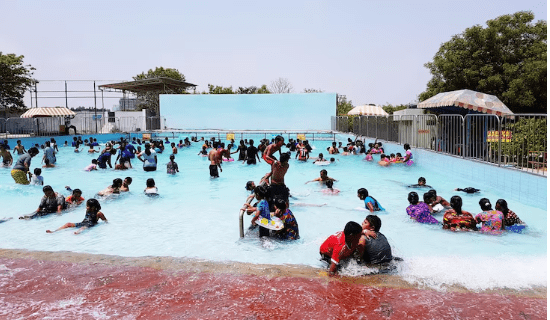
A busy regional water park’s wave pool is nearly full on a Saturday afternoon in the middle of July. Lifeguards are stationed at regular intervals along the perimeter, periodically scanning the sea. Children in various states of swimming, floating, and being driven by the artificial current make up the thick crowd. A group of teens that came together and dispersed within twenty minutes of entering are dispersed over three distinct attractions somewhere in that crowd, and nobody in particular knows where any of them are. A rising number of operators are seriously considering whether their entry restrictions need to alter as a result of this situation, which is repeated in hundreds of water parks on summer weekends.
The water park industry has been debating chaperone policies for a number of years due to two different issues that are commonly confused but are actually unrelated. Behavioral is the first. Large groups of unsupervised teenagers have been linked to disturbances, fights, and the kind of disruptive behavior that makes the surrounding environment uncomfortable for families with younger children. These groups arrive together, frequently in organized waves that some park staff and media coverage have referred to as “teen takeovers”. Although these incidences don’t occur at every park or on every weekend, they do occur frequently enough to be recognized as a trend rather than as individual occurrences.
The second issue is perhaps more important and is more directly related to safety. The risks associated with water environments, such as wave pools, lazy rivers, deep-water slides, and multi-level attraction pools, differ greatly from those associated with dry amusement settings. When an adolescent gets stuck in a current in a lazy river or overestimates their ability to swim in a wave pool when no adult in their group is watching, they can soon find themselves in a dangerous scenario. Although lifeguards are trained to respond, they cover large areas, and even with skilled personnel on duty, it is quite challenging to keep a close eye on a crowded Saturday wave pool with two hundred people. A level of situational awareness that lifeguards are unable to fully duplicate on a large scale is provided by the presence of an adult who is familiar with the youngster and is actively observing them.
There has been a wide range of policy solutions, some of which are indicative of the actual challenges of implementation. Rapids Water Park’s attempt to impose a rigorous chaperone mandate, which required people over a specific age to accompany youngsters, was immediately met with opposition from the community, necessitating changes to the original rules. There is some validity to the objections. A general rule that forbids a responsible fifteen-year-old from going to a water park with friends or mandates that families set up adult supervision for teenagers who are functionally independent in most other situations goes against the way that many parents and young people really live. There is a major problem with enforcement. It is operationally challenging and causes bottlenecks that negatively impact everyone’s experience to check ages and chaperone relationships at a high-volume gate during peak summer hours.
It’s difficult to ignore the fact that this policy discussion is taking place inside a larger, continuing discussion about responsibility in the leisure sector. In the context of water parks, a single drowning incidence can result in years of legal exposure, brand harm, and regulatory scrutiny. There is more to the calculus for operators thinking about chaperone policies than just philosophy. In the event that something goes wrong on their property, it is partially about what level of care they may legitimately claim to have exercised. There is a legal difference between having a recorded policy that mandates adult supervision for youngsters and not having one and depending solely on lifeguard coverage.
Whether these regulations eventually become more uniform throughout the sector or continue to be a patchwork of operator-specific decisions depends in part on whether any regulating body creates explicit guidelines and in part on how the public discourse about access and responsibility develops. It’s still uncertain which way most operators will go; community access and company volume are pushing back, while liability worries are pushing for stronger regulations. The majority of these rules currently exist in the tension between those two forces, evolving one summer season at a time.
