


There is a point in time, about 15 meters below the Coral Sea’s surface, when all outside noise vanishes. Light is bendable. Colors become more vivid. A turtle passes by with a level of patience that makes you slightly ashamed of your timetable. Millions of people who have traveled to the Queensland coast of Australia will never forget that moment. It might also be crucial for the reef itself.
The Great Barrier Reef’s tourism history has never been straightforward. The reef, which is more than 2,300 kilometers long and roughly the size of Japan, is home to six of the seven species of sea turtles in the world in addition to over 1,600 fish species. Every year, it contributes about AU$9 billion to the economy. However, guides will also discuss rising ocean temperatures, coral bleaching, and the years it takes for damaged coral to recover, if at all, in the same breath that they recite those statistics. For decades, there has been a growing conflict between wanting people to see this location and being concerned about the cost of doing so.
However, there has been a recent shift in the tourism industry’s approach to addressing this tension and its level of seriousness.
The Coral Nurture Program, a collaboration between tour operators and marine scientists at the University of Technology Sydney, currently has a number of operators in the Cairns and Port Douglas area. These operators maintain coral nurseries, outplant grown corals to damaged reef sections, and track recovery data over time instead of just transporting tourists to and from reef sites. The science is true. The project is still in progress. Additionally, tourists are becoming more and more involved.
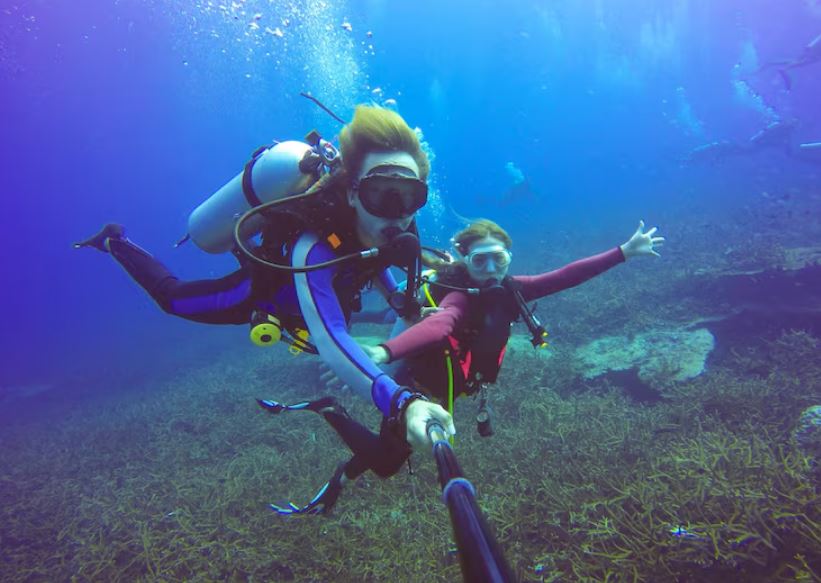
Passions of Paradise is a sailing catamaran company based in Cairns that has been hiring scientists on board since 1997. The company offers what it refers to as a “Be a Marine Biologist” experience. Visitors survey the health of the reef for an entire day, documenting their findings and sending them straight to scientific programs. According to CEO Scotty Garden, passengers are now requesting action rather than merely passively supporting reef conservation. It’s important to notice this change in visitor expectations from spectator to participant.
This model may be effective because it makes a request of the traveler. There is a type of reef tourism that deceives tourists into believing that just being there is an act of kindness toward the environment. That is not as honest as the conservation diving approach.
It reads, “The reef is under pressure; here’s an up-close look at that, and here’s something tangible you can do.” People defend what matters to them, according to Fiona Merida, director of reef education and engagement at the Great Barrier Reef Marine Park Authority. An abstract environmental issue becomes personal through first-hand experience.
The argument is supported by the financial reasoning. Each visitor to the reef pays an environmental management fee, which goes directly to the Marine Park Authority for reef management, research, and coral replanting. Contrary to popular belief, less tourism equates to less funding for conservation. Vessels, staff knowledge, and time are all contributed to monitoring programs by the operators themselves. The way the industry has rejected the idea that tourism and preservation are inherently at odds is almost stubborn.
Another coral program participant, Sailaway Port Douglas, recently unveiled what is purportedly the first glass-bottom electric boat in history for its tours, powered by renewable energy. It’s a minor detail that can be easily missed in a larger discussion about the health of reefs. However, it speaks to a kind of pragmatic seriousness that results from years of observing the same sites and observing slow change.
It’s genuinely unclear if all of this is sufficient. The Great Barrier Reef is not immune to the stresses of warming oceans and coastal development, and coral bleaching events have happened in successive years throughout the world. The reef has endured for millions of years and still has the potential to recover, according to marine biologist Dr. Eric Fisher. However, recovery takes time, and anyone in charge of this ecosystem cannot afford to waste time.
What is evident is the renegotiation of the relationship between the reef and its visitors. Something more difficult to classify is replacing the traditional transactional model of purchasing a ticket, seeing some fish, and returning home. Call it citizen science, conservation tourism, or simply a more truthful description of what it means to travel to a location this vulnerable. Regardless of the label, the divers are returning, staying longer, and posing better questions.
